
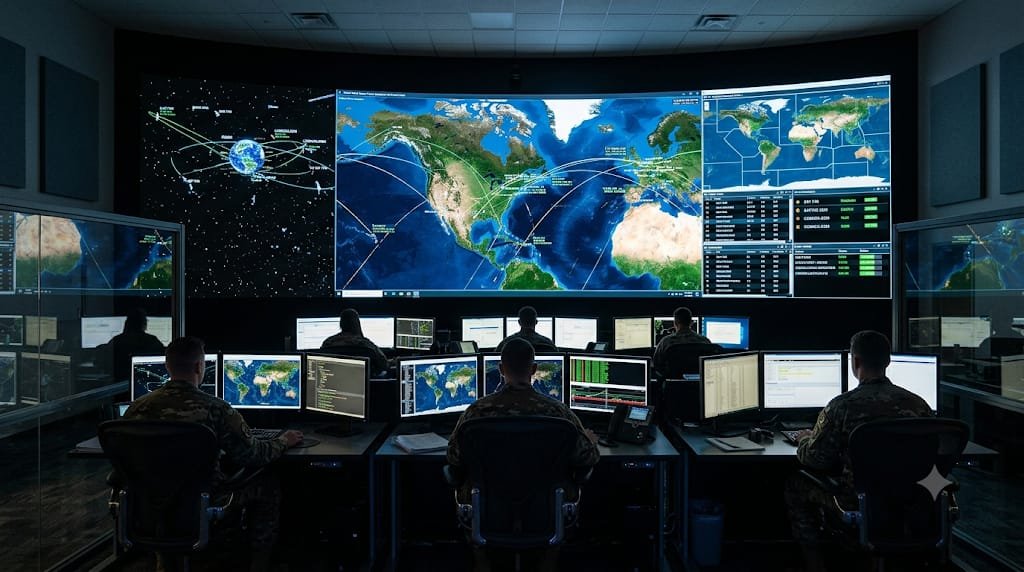
United States Space Force
The United States has confirmed something that could mark a major turning point in modern military strategy: the U.S. Space Force now has weapons operating in orbit.
The disclosure came from Air Force Secretary Troy Meink on September 14, 2026, during the Air & Space Forces Association’s Air, Space & Cyber Conference in Maryland. Meink said the Space Force has “on-orbit space control weapons” capable of defending the joint force against hostile adversary action.
The statement was brief, but its implications are much larger.
For years, the United States has warned that space could become a contested military domain. Satellites already play a critical role in communications, navigation, intelligence, missile warning and battlefield operations. Now Washington has publicly acknowledged that it has weapons in orbit designed to respond to threats in that environment.
What Exactly Has the U.S. Put in Space?
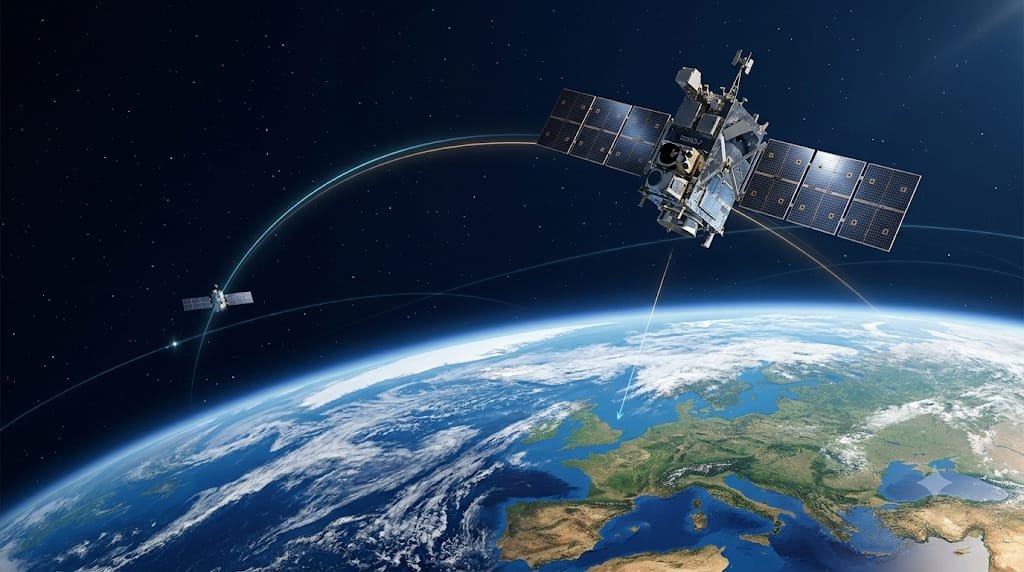
This is the biggest unanswered question.
Meink did not identify the weapons, reveal how many are deployed or explain where they are operating. The Pentagon has also not provided technical details about their capabilities.
That means it would be inaccurate to simply describe the systems as missiles stationed in space.
The term “space control weapons” is much broader. In military language, space control can involve capabilities intended to protect friendly spacecraft and potentially disrupt or counter an adversary’s space systems.
Those capabilities could include different types of technologies, including systems that interfere with satellite operations without physically destroying a spacecraft. Other possibilities may involve more direct forms of counter-space capability.
For now, however, the exact systems remain classified.
That uncertainty may actually be part of the strategy.
Meink said the decision to acknowledge the weapons was deliberate, while details about specific capabilities would not help deterrence. In other words, Washington appears to want its competitors to know that the United States can respond in space without telling them exactly how it would do it.
NATO vs BRICS: Military Strength, Weapons & Who Would Win? (Full Data)
Why Space Has Become So Important to the U.S. Military
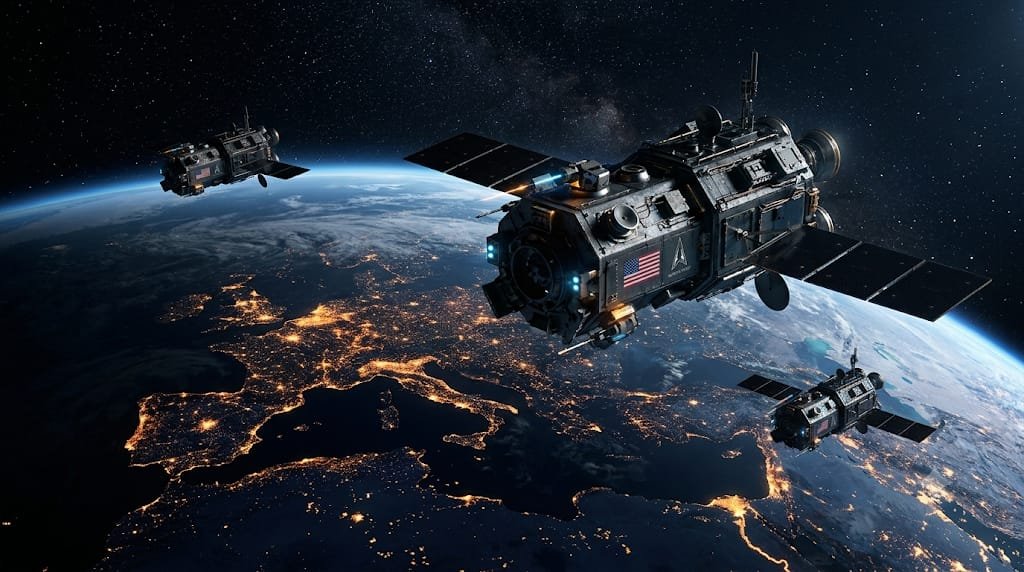
United States Space Force
Modern warfare is heavily dependent on space.
A military operation may look like it is happening on the ground, in the air or at sea, but many of the systems supporting it can depend on satellites.
GPS helps provide positioning and timing. Communications satellites allow forces to exchange information over enormous distances. Intelligence satellites provide surveillance. Missile-warning satellites can detect launches and provide critical information to commanders.
If those systems are disrupted, the effects could reach far beyond space itself.
That is one reason the United States established the Space Force as a separate military service in 2019. The goal was to give space operations a dedicated military structure as competition in orbit became more serious.
The latest disclosure suggests that the role of the Space Force is moving beyond simply operating satellites. It is increasingly about being able to protect and, if necessary, fight for U.S. interests in space.
China and Russia Are Central to the Concern
United States Space Force
Washington’s decision cannot be separated from its growing competition with China and Russia.
U.S. officials have repeatedly warned that both countries are developing capabilities that could threaten American satellites and other space assets.
Russia has demonstrated sophisticated satellite maneuvering and counter-space capabilities, while China has rapidly expanded its military space program and demonstrated increasingly advanced operations involving spacecraft.
From the American perspective, having weapons capable of responding to an attack could strengthen deterrence.
The basic message is straightforward: if an adversary knows that attacking U.S. satellites could trigger a response, it may think twice before doing so.
But there is another side to the equation.
China and Russia could see the same weapons not as defensive tools, but as evidence that Washington is preparing for a future conflict in space.
That difference in perception could become a serious problem.
Is a New Space Arms Race Starting?
United States Space Force
The possibility is already attracting attention.
China has criticized the growing militarization of outer space following the U.S. announcement and warned against creating a new arms race.
The concern is easy to understand.
If the United States deploys new space weapons, China may feel pressure to strengthen its own capabilities. Russia could do the same. Washington would then see those developments as additional threats and potentially respond with even more advanced systems.
It is a familiar security dilemma, but this time the battlefield is hundreds or thousands of kilometres above Earth.
There is also a major difference between space and traditional battlefields: debris.
If countries begin destroying satellites with physical attacks, the resulting debris could remain in orbit and threaten other spacecraft. A large-scale conflict could therefore damage not only military systems but also commercial satellites and other space infrastructure used by countries around the world.
That is one reason military planners are also interested in non-destructive ways of countering satellites.
The U.S. Is Preparing for More Than Just Satellite Protection
United States Space Force
The latest announcement is part of a much broader expansion of American military activity in space.
Meink also disclosed that the Space Force has achieved “flight ready” hardware for space-based interceptors intended to engage adversary missiles from orbit. Those systems are connected to the administration’s broader Golden Dome missile-defense plans.
The United States is also expanding its ability to monitor activity from space.
According to Meink, the first of a new group of air-moving target indication satellites is expected to launch this month. The planned constellation is intended to provide wider coverage for tracking airborne threats.
Taken together, these developments show that Washington is thinking about space as a much larger part of national defense.
It is no longer just about putting satellites into orbit and protecting them.
The goal is increasingly to build a military architecture that can operate effectively even if space becomes contested.
What Does This Mean for Future Wars?
United States Space Force
The biggest change may be psychological rather than technological.
For decades, space was treated as a strategic support environment. Countries used satellites to improve their military capabilities, but the idea of openly deploying weapons in orbit remained politically sensitive.
That line is becoming less clear.
The U.S. acknowledgment suggests that military planners now believe space must be treated as a domain where conflict could actually occur.
A future conflict involving the United States and a major military power could therefore begin with actions against satellites before traditional forces even engage.
Communications could be disrupted. Surveillance satellites could be targeted. Navigation systems could be interfered with. Spacecraft could be forced to maneuver or defend themselves.
The country that can maintain access to space while denying an opponent the same advantage could gain a significant military edge.
The Real Question Is What Comes Next
United States Space Force
For now, the United States has confirmed the existence of orbital space-control weapons, but the most important details remain secret.
That leaves governments, military analysts and the public trying to understand what these systems can actually do.
The announcement does not mean that a war in space is inevitable. In fact, one purpose of revealing the capability may be to prevent conflict by convincing potential adversaries that an attack would carry serious consequences.
United States Space Force
But deterrence can work only if the other side believes the threat is real.
That appears to be the message Washington is sending.
The United States is no longer simply preparing to defend its satellites from the ground. It is signaling that it has capabilities in orbit that can be used to protect its forces if space itself becomes a battlefield.
For China and Russia, the message is equally clear: the next major military competition may not stop at the edge of the atmosphere.
The race for military advantage is moving higher—and the consequences could reach far beyond space.
United States Space Force
BRICS vs G7 2026: Can BRICS Challenge the West’s Economic Power?
1 thought on “United States Space Force Confirms Weapons in Orbit: What It Means for China, Russia and the Future of War”