
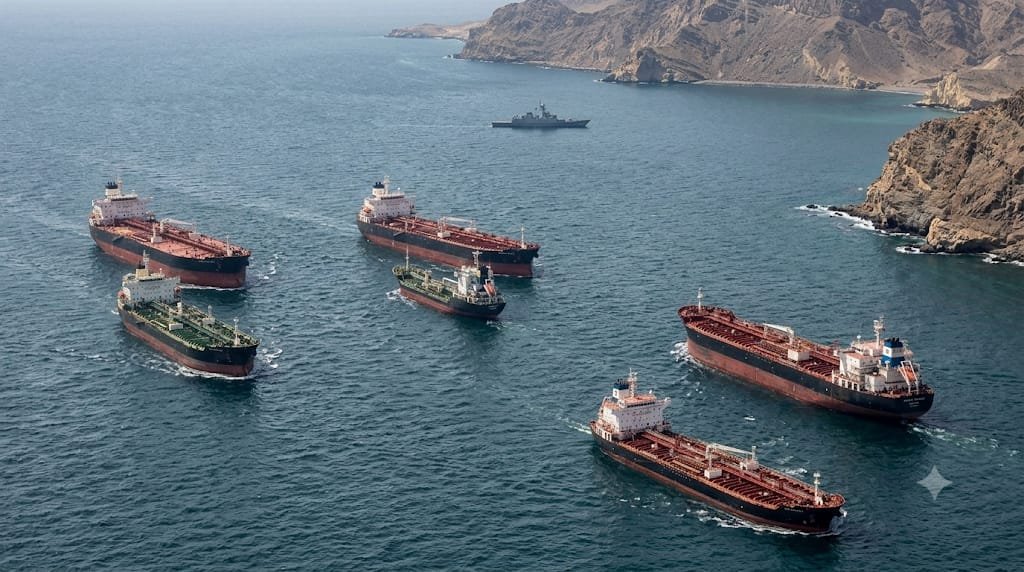
The Strait of Hormuz is facing a fresh escalation as the U.S.-Iran war continues to disrupt commercial shipping and increase pressure on the global energy market.
The latest development is a sharp fall in vessel traffic through the strategic waterway. According to shipping data reported by Reuters, only four commodity vessels crossed the Strait of Hormuz on Monday, compared with 10 the previous day. Before the war, the waterway was seeing around 125 such transits a day.
The dramatic decline shows that the shipping crisis is becoming more severe, even as some vessels continue to move through the area.
US-Iran War Expands: Iraq Drone Probe and Houthi Advance Open a New Front
What Happened in the Strait of Hormuz?
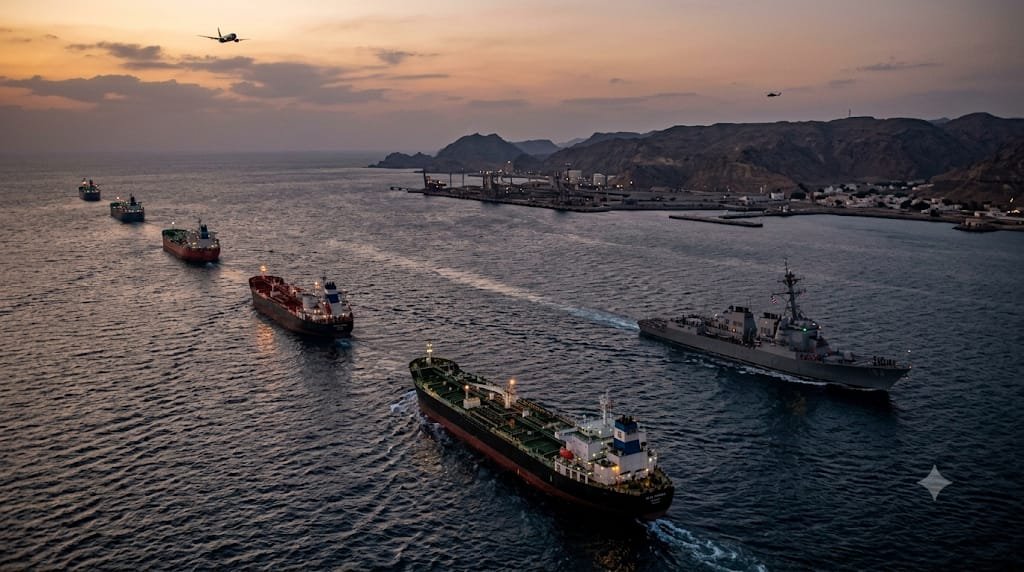
A new tanker incident has added to concerns about the safety of commercial vessels.
The oil tanker El Gaia was involved in an incident near the Strait. Iranian reports said the vessel had struck a naval mine, while the U.S. military disputed that account and said the ship had previously been hit by an Iranian missile and was attacked again.
The conflicting accounts have made it difficult to establish the exact circumstances immediately. But for shipping companies, the incident has another important consequence: it increases the perceived risk of operating in one of the world’s most important oil routes.
That risk is already affecting the number of vessels willing to enter the Strait.
Hormuz Shipping Has Not Returned to Normal

There have been signs of limited movement through the waterway, but the overall level of traffic remains far below normal.
The difference between today’s traffic and the pre-war average is particularly significant. Hormuz normally handles a huge volume of energy shipments, making any prolonged disruption a concern for oil-importing countries around the world.
The latest figures suggest that commercial operators remain extremely cautious.
For shipping companies, the decision is not simply about whether a vessel can physically pass through the Strait. Insurance costs, the possibility of attack and the safety of crews all have to be considered.
As a result, even when the waterway is technically navigable, commercial traffic can remain severely restricted.
Talks Over Reopening the Strait Have Stalled
US-Iran War Latest Update
Another important development is the failure to move forward with diplomatic efforts involving Iran and Gulf Arab states.
A planned meeting in Oman aimed at discussing the Strait of Hormuz and the possibility of improving shipping conditions has been postponed.
The setback comes at a particularly sensitive moment because Gulf countries have a direct economic interest in keeping the waterway open. Their economies depend heavily on energy exports, while continued disruption threatens both oil revenue and regional trade.
Reuters reported that the postponement came as violence elsewhere in the region intensified.
For now, there is no clear diplomatic breakthrough that would guarantee a return to normal shipping.
Houthi Attacks Add Another Problem
US-Iran War Latest Update
The situation is also becoming more complicated because of developments in Yemen.
Iran-backed Houthi forces have launched new missile and drone attacks against Saudi Arabia, including an attack on a military airbase in Khamis Mushait.
The Houthis have also made moves around the entrance to the Red Sea, creating additional concerns for maritime traffic in the wider region.
This matters because ships already facing problems around Hormuz could also face risks on alternative routes.
The Strait of Hormuz connects the Persian Gulf with the Gulf of Oman, while the Red Sea and Bab el-Mandeb provide another important route for ships travelling between Asia, the Middle East and Europe.
If both areas remain unstable, the impact on global shipping could become much larger.
Oil Prices Remain Under Pressure
US-Iran War Latest Update
The latest developments are also being reflected in global energy markets.
Oil prices have moved above $100 a barrel as traders assess the possibility of prolonged supply disruption. Reuters reported that concerns over attacks in the region and disruption to energy infrastructure have added to the pressure on oil markets.
The biggest concern for markets is no longer just whether oil supplies are disrupted for a few days.
The question is how long the disruption could continue.
If tanker traffic remains extremely low, energy companies may have difficulty moving crude and other petroleum products from the Gulf to international buyers. That could keep prices elevated and increase transportation and production costs in countries far away from the conflict.
What Happens Next in Hormuz?
US-Iran War Latest Update
The next few days could be important.
The first thing to watch will be tanker traffic. If the number of commercial vessels crossing the Strait begins to rise consistently, it could indicate that shipping companies are becoming more confident about operating in the area.
The second issue will be diplomatic talks. A new agreement between Iran and Gulf states could help reduce the immediate pressure on commercial shipping.
The third and potentially most dangerous factor is regional escalation.
If attacks involving Iran, Saudi Arabia or the Houthis continue to expand, the crisis could move beyond the Strait itself and create simultaneous pressure on several major shipping routes.
Why This Latest Update Matters
The latest developments show that the Hormuz crisis is not simply about one blocked or threatened shipping route.
It is becoming a broader security and economic problem.
The collapse in vessel traffic, the latest tanker incident, stalled diplomatic efforts and continuing attacks in the region are all adding to uncertainty.
For the United States, keeping the waterway secure is important not only for military reasons but also because prolonged disruption could put additional pressure on global energy markets.
For Iran, control over the Strait provides significant strategic leverage during the war.
And for Gulf countries, the longer the crisis continues, the greater the risk to their economies and energy exports.
For now, the Strait of Hormuz remains open to some traffic, but normal commercial movement has clearly not returned.
The next major signal will be whether shipping numbers begin to recover—or fall even further as the U.S.-Iran war continues.