
US-Iran War
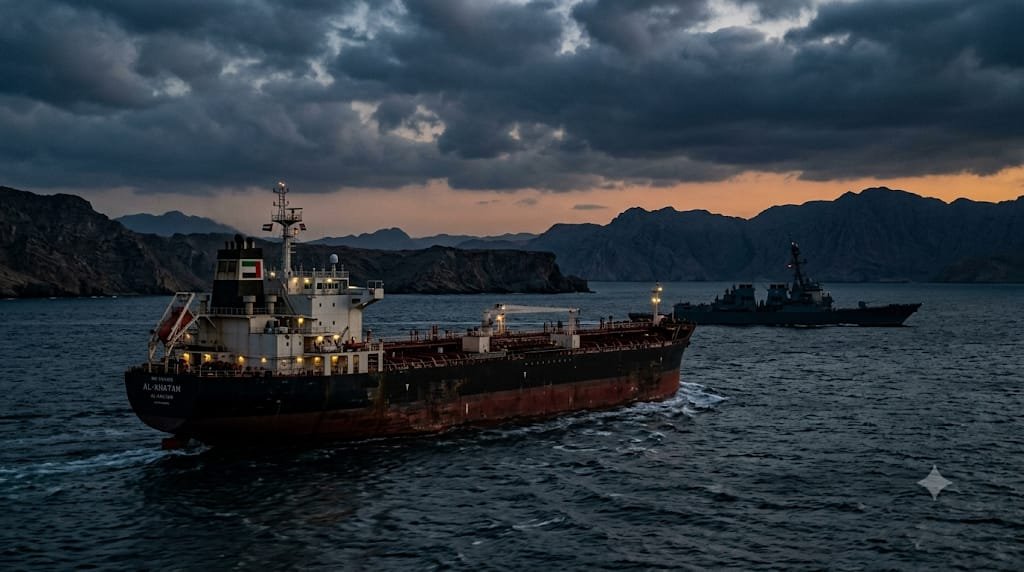
WASHINGTON — Rising military friction between Washington and Tehran is no longer confined to isolated proxy skirmishes in the desert. Over the past several days, commercial shipping monitors and naval command centers have shifted their focus to the narrow waterway that handles roughly twenty percent of the world’s petroleum: the Strait of Hormuz.
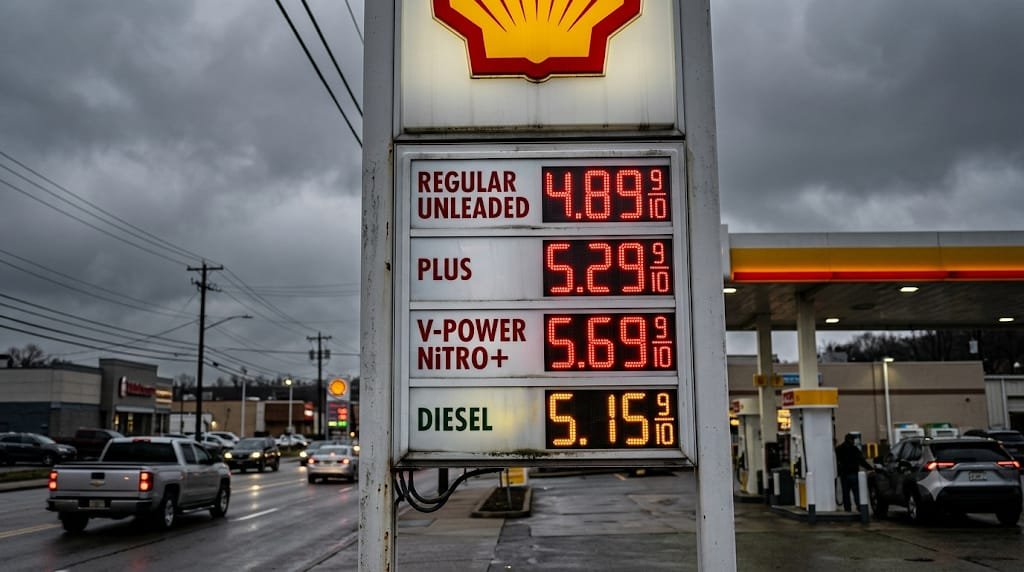
For American drivers already contending with stubborn household costs, what happens in this twenty-one-mile-wide choke point matters far more than typical overseas diplomacy. As the Pentagon repositions naval strike assets and Iranian fast-attack craft conduct aggressive shadowing runs, the risk of a miscalculation turning into an energy supply freeze has climbed sharply.
The Choke Point That Dictates Global Fuel Costs
US-Iran War
The geography of the Persian Gulf offers no margin for error. Tankers carrying crude from Saudi Arabia, Iraq, the United Arab Emirates, and Kuwait must pass through the Strait of Hormuz to reach open water. There are no alternative pipelines capable of routing that volume around the passage.
Market analysts track the region obsessively for one reason: oil is priced on a global margin. Even though the United States produces significant domestic crude, a sudden disruption in Middle Eastern maritime transit ripples across commodity exchanges within minutes.
The Immediate Exposure for US Drivers
When Brent crude contracts experience a sharp climb in overseas trading, retail fuel stations in the United States adjust their pricing within days. Energy economists point out that every ten-dollar jump in a barrel of crude translates to a roughly twenty-five to thirty-cent increase per gallon at the pump.
If commercial vessels face sustained harassment, insurance premiums on tankers spike so aggressively that shipping firms pause transit entirely. That creates an artificial shortage before a single drop of fuel is physically lost.
Why Air Superiority Does Not Solve Maritime Asymmetry
US-Iran War
Tehran has invested decades building an arsenal tailored specifically to counter heavy conventional warships in confined spaces:
- Low-cost unmanned aerial systems capable of overwhelming defensive radar suites
- Mobile anti-ship missile batteries hidden in coastal mountain tunnels
- Swarms of armed, fast-maneuvering speedboats designed to box in commercial shipping channels
- Naval mine networks laid along established deep-water transit corridors
Clearing these asymmetric threats takes time, specialized minesweeping operations, and sustained air cover. During that cleanup period, civilian cargo movement effectively halts.
Capitol Hill Pushes for Clear Strategic Milestones
US-Iran War
The escalating confrontation comes at an awkward moment for policymakers in Washington. Lawmakers across committee hearings are questioning how long the Navy can maintain round-the-clock escort missions without depleting munitions stockpiles needed elsewhere.
Deploying carrier groups to the region drains readiness from the Pacific, where deterrence demands significant forward naval presence.
The Problem of Low Strategic Reserves
US-Iran War
During previous energy shocks, Washington could tap the Strategic Petroleum Reserve (SPR) to stabilize domestic pump prices. However, following aggressive drawdowns to temper past inflationary spikes, reserve stockpiles sit far below historic highs.
The federal government does not hold the same buffer it had during prior Persian Gulf flare-ups. A prolonged shutdown in the strait would leave domestic markets vulnerable to direct price shocks.
How Regional Partners Are Responding
US-Iran War
Allied Gulf states are caught in the crosshairs. While they rely on American maritime escorts to guarantee their primary export revenue, they are also wary of being drawn into an overt military escalation that invites missile strikes on their own refining facilities.
Behind the scenes, Gulf capitals have urged restraint while simultaneously quietly asking the Pentagon to reinforce radar coverage and defensive surface-to-air interceptors around vital export terminals.
What to Watch Next in the Persian Gulf
US-Iran War
The coming weeks will determine whether the standoff remains a high-stakes standoff or morphs into a prolonged blockade. Three critical indicators will signal where the crisis heads next:
- Maritime Reinsurance Rates: If Lloyd’s of London and maritime underwriters declare the Strait of Hormuz a full war-risk exclusion zone, tanker traffic will grind to a halt regardless of military escort promises.
- Rules of Engagement: Any incident where an unmanned drone or fast boat is intercepted with kinetic fire inside international waters could trigger retaliatory missile exchanges against coastal infrastructure.
- Weekly Gas Price Trajectories: Fuel wholesalers watch crude futures in real time. If spot prices break higher on sustained security warnings, regional US pump price increases will follow shortly after.
For now, the situation in the Persian Gulf remains on a hair-trigger, and the bill for any escalation will be paid directly at American fuel pumps.
US-Iran War
for more information please read-Houthi Attack on Saudi Arabia