

NATO Defense Spending Fight Explodes in Washington Over US Taxpayer Burden
Walk into any congressional office on Capitol Hill this week and mention allied military contributions, and you will get an earful. The diplomatic soft-pedaling that defined Washington’s foreign policy for decades is gone. Instead, both Republican and Democratic lawmakers are openly asking why working-class Americans should bankroll the baseline security of wealthy European nations that refuse to fund their own defense.
This is not a theoretical foreign policy debate anymore. With the federal budget under intense pressure and inflation continuing to strain household wallets across the United States, foreign aid and overseas defense commitments face a level of domestic pushback unseen in modern memory.
The Broken Promise of the Two Percent Rule
NATO Defense Spending Fight Explodes in Washington Over US Taxpayer Burden
The root of this frustration traces directly back to the 2014 Wales Summit. During that gathering, all alliance members shook hands and pledged to hit a clear benchmark: spend at least two percent of gross domestic product on defense within ten years.
A decade came and went, yet the disparity between rhetoric and balance sheets remains glaring.
Eastern Front vs Western Complacency
The alliance has effectively split into two distinct tiers of commitment:
Countries sharing direct borders with hostile territory—most notably Poland and the Baltic republics—treated the two percent target as a floor rather than a ceiling. They ramped up procurement, bought artillery and air-defense batteries, and asked their citizens to bear the cost because national survival was at stake.
Meanwhile, major economies deeper inside Western Europe took a very different path. For years, capitals across the continent delayed equipment upgrades, treated military stockpiles as secondary, and balanced domestic social budgets by assuming the Pentagon would always bail them out if things went south.
The Accounting Tricks Hiding the Gaps
NATO Defense Spending
Even when European defense figures appear to increase on official balance sheets, the reality on the ground often tells a different story. Much of that reported growth gets swallowed up by military pension obligations, rising personnel overhead, and administrative costs rather than deployable hardware.
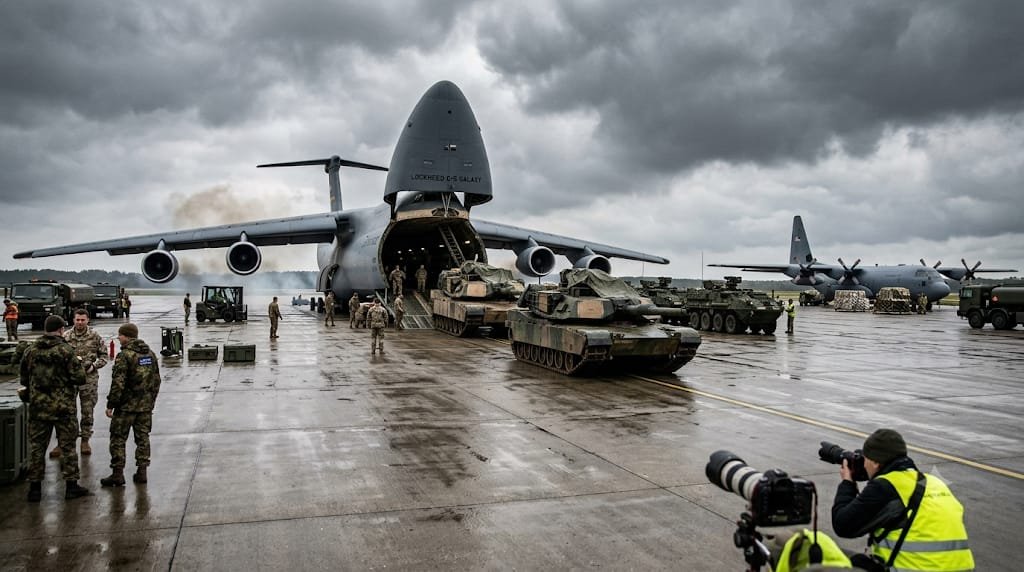
Having two percent on a spreadsheet means very little when an army lacks enough functional transport aircraft, spare artillery parts, and precision munitions to sustain two weeks of high-intensity operations.
Why Washington Cannot Afford an Open Tab Any Longer
NATO Defense Spending
American reluctance to continue carrying this burden is not driven by isolationism. It is driven by harsh arithmetic and competing global priorities that the United States cannot afford to ignore.
The Looming Pacific Pivot
NATO Defense Spending
The Pentagon’s single biggest strategic challenge does not sit on the plains of Eastern Europe. It sits across the vast expanse of the Indo-Pacific. Maintaining freedom of navigation in contested waterways, safeguarding critical semiconductor supply chains, and building credible naval deterrence requires immense capital investment.
The United States cannot function as the primary land army for Europe while simultaneously financing the naval and air dominance needed across the Pacific Rim.
Industrial Bottlenecks and Empty Warehouses
NATO Defense Spending
The heavy arms shipments sent overseas over the past two years exposed a brutal reality about the American defense industrial base. Precision rockets, air-defense interceptors, and 155mm artillery shells are not consumer goods that can be printed on demand.
Factories take years to tool up, and assembly lines have been burning through domestic stockpiles. Washington cannot risk depleting its own baseline readiness just to compensate for allies that underfunded their domestic defense factories for a quarter-century.
What Real Burden-Sharing Actually Requires
If the alliance expects to remain credible, the dynamic has to transition from a parent-child relationship into a genuine partnership where every partner carries real weight.
Genuine Hardware Over Bureaucratic Targets
Throwing money at arbitrary budget benchmarks will not fix the underlying vulnerability. European nations need to build interoperable logistics networks, independent heavy-lift capacity, and sovereign ammunition manufacturing lines. Relying on American transport to move European brigades across European highways is no longer acceptable.
Hard Deadlines for American Backstops
Diplomats will always prefer endless summits and compromise language, but lawmakers in Washington are demanding clear milestones. If a partner nation chooses to prioritize broad domestic entitlement programs while neglecting its armed forces, it must understand that forward-deployed American assets will eventually be repositioned to theaters where partners actively share the load.
The message coming out of Capitol Hill is loud, blunt, and permanent: the era of an unlimited American security credit card is officially over.
1 thought on “NATO Defense Spending Fight Explodes in Washington Over US Taxpayer Burden”