
US Iran War Latest: Saudi Pipeline Attack Raises Fears of Wider Conflict
The conflict between the United States and Iran is entering another dangerous phase as tensions spread beyond the battlefield and threaten major oil and shipping routes across the Middle East.
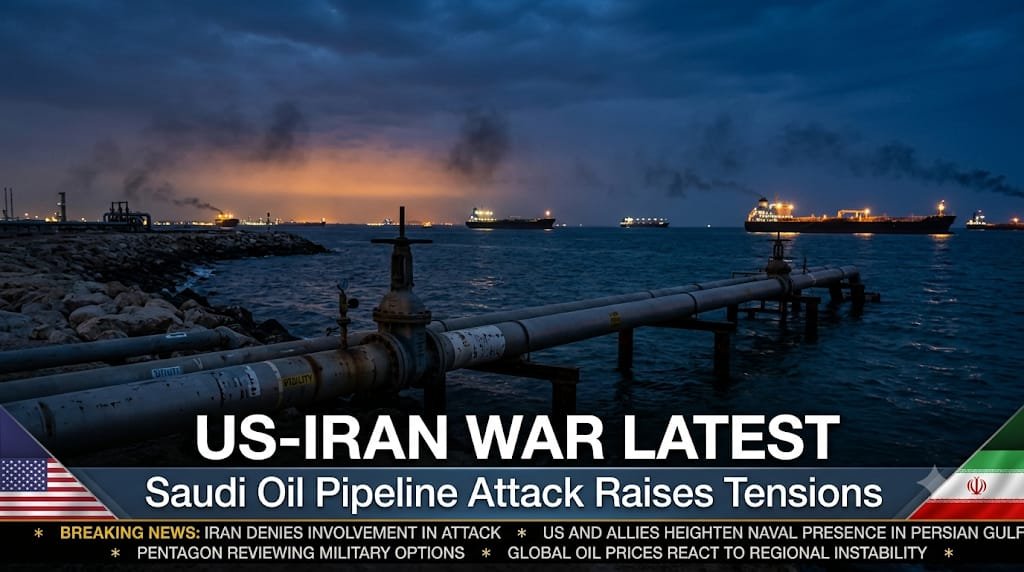
The latest development came after a drone attack targeted Saudi Arabia’s critical East-West oil pipeline. Saudi Arabia temporarily suspended the pipeline as a precaution, while Iraqi authorities confirmed that the attack originated from Iraqi territory. U.S. President Donald Trump said Iran was probably responsible for the attack.
The development has raised fresh concerns that the conflict could expand further across the region, affecting global energy supplies, commercial shipping and oil prices.
What Happened to Saudi Arabia’s Oil Pipeline?
US Iran War Latest: Saudi Pipeline Attack Raises Fears of Wider Conflict
Saudi Arabia’s East-West pipeline is one of the country’s most important energy routes because it provides an alternative route for exporting crude oil when shipping through the Strait of Hormuz is disrupted.
The approximately 1,200-kilometer pipeline can transport several million barrels of oil per day toward the Red Sea. Its importance has increased significantly during the current U.S.-Iran conflict because the Strait of Hormuz has become increasingly difficult and risky for commercial shipping.
Following the drone attack, Saudi Arabia temporarily shut down the pipeline. The move has increased concerns about the availability of oil supplies at a time when energy markets are already under pressure.
Iraq has launched an investigation after confirming that the drones originated from its territory. Baghdad also dismissed a regional military commander and took additional security measures along its border with Iran.
Trump Points to Iran
US Iran War Latest: Saudi Pipeline Attack Raises Fears of Wider Conflict
However, the situation remains politically and militarily sensitive because no group has publicly claimed responsibility for the attack.
The accusation comes as Washington continues its confrontation with Tehran and as Iran-backed groups across the region become increasingly active.
Trump has also said that Yemen’s Houthi movement has communicated with his administration and indicated that it does not want direct confrontation with the United States.
Houthis Increase Pressure on Red Sea Shipping
US Iran War Latest: Saudi Pipeline Attack Raises Fears of Wider Conflict
Another major development is taking place in Yemen.
Iran-backed Houthi forces have rapidly expanded their control along Yemen’s Red Sea coast and have taken strategically important territory, including areas around the Bab al-Mandab Strait.
The Bab al-Mandab is one of the world’s most important maritime chokepoints. A prolonged disruption there could affect commercial shipping between the Red Sea and the Indian Ocean.
Reports indicate that tens of thousands of Yemeni civilians have been displaced by the latest fighting, adding a major humanitarian dimension to the regional crisis.
Strait of Hormuz Remains a Major Flashpoint
US Iran War Latest: Saudi Pipeline Attack Raises Fears of Wider Conflict
The Strait of Hormuz remains at the center of the U.S.-Iran confrontation.
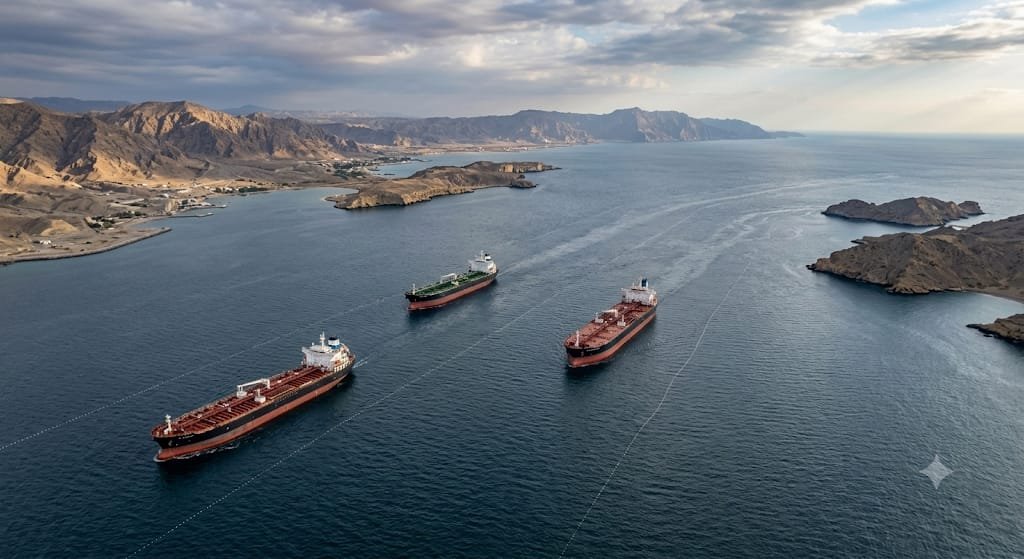
The waterway is one of the world’s most important routes for oil shipments. Any prolonged disruption could have consequences far beyond the Middle East.
According to the latest reporting, U.S. forces have redirected commercial vessels as part of efforts to enforce restrictions around the Strait, while Iran and regional countries are preparing discussions about maritime security and safe commercial shipping.
Iran has also announced plans involving a new Gulf exclusion zone and a proposed shipping corridor through the Strait of Hormuz, further increasing uncertainty for international shipping companies.
Oil Prices Face New Pressure
US Iran War Latest: Saudi Pipeline Attack Raises Fears of Wider Conflict
The latest escalation is already creating concerns in global energy markets.
Brent crude has moved above $100 per barrel during the conflict, according to the Council on Foreign Relations’ latest conflict tracker. The United States is also considering measures to increase domestic refining capacity as fuel prices rise.
Higher oil prices could eventually translate into more expensive gasoline, diesel, transportation and other energy-related costs for consumers.
For countries that import large amounts of crude oil, a prolonged disruption could become a significant economic problem.
Is the US-Iran War Getting Wider?
US Iran War Latest: Saudi Pipeline Attack Raises Fears of Wider Conflict
The latest developments suggest that the conflict is no longer limited to direct military confrontation between Washington and Tehran.
Iran-linked groups are active in several parts of the region, while the United States continues to operate military forces around key waterways and strategic locations.
The conflict tracker maintained by the Council on Foreign Relations currently describes the confrontation as an interstate war with a worsening status. It also identifies disputes over Iran’s nuclear program, the Strait of Hormuz and sanctions relief as major unresolved issues.
This means that even if direct U.S.-Iran fighting decreases, regional groups and strategic waterways could continue to create new flashpoints.
Diplomatic Efforts Continue
US Iran War Latest: Saudi Pipeline Attack Raises Fears of Wider Conflict
Despite the military escalation, diplomacy has not completely disappeared.
Iran and regional countries are expected to discuss maritime security and safe commercial shipping in Oman. At the same time, international leaders are calling for restraint.
At the BRICS summit in New Delhi, member countries expressed deep concern about the escalating Middle East conflict and called for maximum restraint, dialogue and diplomacy.
However, a durable U.S.-Iran agreement remains difficult.
The two sides continue to disagree over Iran’s nuclear program, sanctions, military capabilities and the future security arrangements around the Strait of Hormuz.
US Iran War Latest: Saudi Pipeline Attack Raises Fears of Wider Conflict
What Happens Next?
US Iran War Latest: Saudi Pipeline Attack Raises Fears of Wider Conflict
The next few days could be critical.
The biggest questions are whether Saudi Arabia’s pipeline will remain shut, whether another attack targets Gulf energy infrastructure, and whether the situation around the Strait of Hormuz deteriorates further.
Another major concern is whether the fighting involving Iran-backed groups in Yemen spreads into a broader regional confrontation.
For the United States, preventing disruption to global energy supplies while limiting the expansion of the conflict will be a major challenge.
For Iran, maintaining pressure on the United States and its regional allies while avoiding a conflict that could bring an even larger military response will be equally difficult.
End Line
US Iran War Latest: Saudi Pipeline Attack Raises Fears of Wider Conflict
The latest Saudi pipeline attack has added a new and potentially dangerous dimension to the U.S.-Iran conflict.
With the Strait of Hormuz under pressure, Houthi forces expanding their position around the Red Sea, and oil prices above $100 per barrel, the economic consequences of the war could become increasingly global.
The immediate focus will be on whether the latest escalation remains contained or triggers a much broader Middle East crisis.
This article is based on the latest available reports as of September 12, 2026. Developments in the U.S.-Iran conflict are rapidly changing and may be updated as new information becomes available
US Iran War Latest: Saudi Pipeline Attack Raises Fears of Wider Conflict
2 thoughts on “US Iran War Latest: Saudi Pipeline Attack Raises Fears of Wider Conflict”