
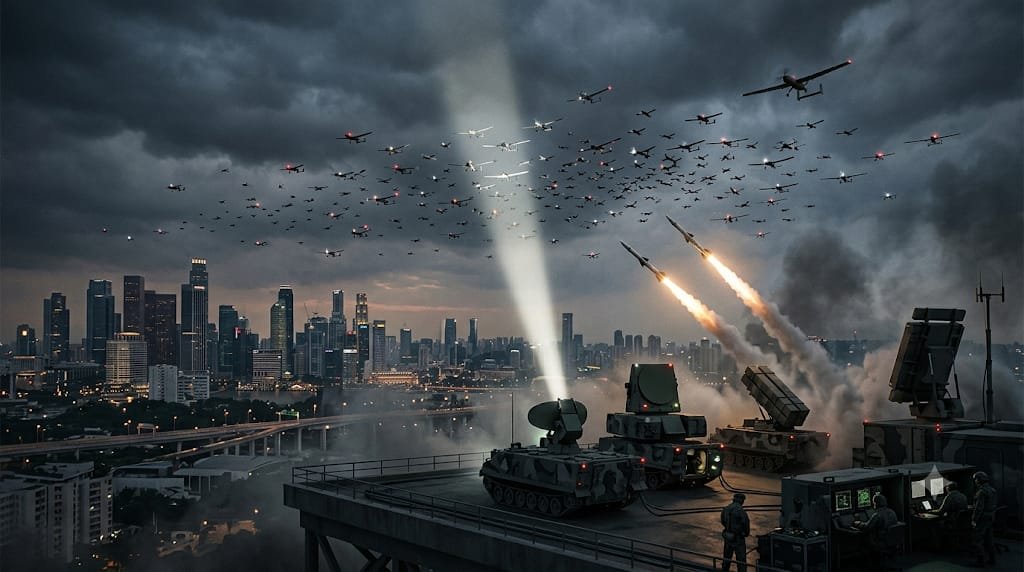
Why Modern Air Defense Systems Struggle to Stop Low-Cost Drone Swarms
Modern air defense was built around a familiar problem: detect an incoming aircraft or missile, track it and launch an interceptor before it reaches its target. Cheap attack drones are changing that equation.
The problem is not simply that drones are difficult to detect. It is that an attacker can launch large numbers of relatively inexpensive systems while forcing the defender to use weapons that can cost far more. When dozens or hundreds of drones arrive in waves, the question becomes less about whether a single drone can be shot down and more about whether the entire defense network can keep up.
The Cost Imbalance Is the Biggest Problem
NATO vs BRICS: Military Strength, Weapons & Who Would Win?
Traditional air-defense missiles are designed to destroy dangerous and sophisticated targets. Using them against inexpensive drones can quickly become an expensive way of fighting.
This imbalance has become increasingly visible in Ukraine, where Russia has used large numbers of one-way attack drones alongside missiles. The goal is not necessarily for every drone to reach its target. A large enough wave can force defenders to activate radars, consume interceptors and reveal where defensive systems are positioned.
That creates a difficult calculation for air-defense commanders. A drone may be relatively cheap, but allowing it through could mean damage to a power station, military facility or other critical infrastructure.
Numbers Can Overwhelm Even Strong Defenses
A modern air-defense system can be extremely effective against individual threats. Swarms create a different challenge.
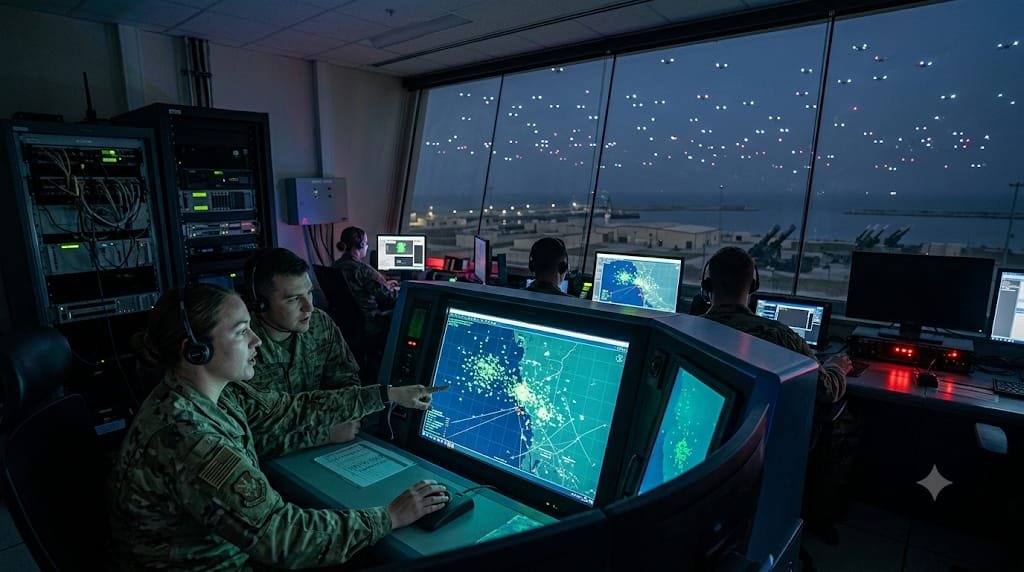
When many drones approach from different directions, defenders must detect, identify and assign weapons to multiple targets almost simultaneously. Radar operators and automated systems have to distinguish genuine threats from other objects while maintaining enough interceptor capacity for the next wave.
Recent developments in Ukraine show how quickly this problem is evolving. Russia has introduced faster, jet-powered drone variants that are more difficult to intercept than earlier, slower systems. The Financial Times recently reported that Ukrainian defenses have struggled to maintain the interception rates previously achieved against some of these newer drones.
Low Flight and Electronic Warfare Add Another Layer
Low-Cost Drone Swarms
Drones can also complicate detection by flying at relatively low altitudes. Terrain, buildings and other obstacles can reduce the time available for radar systems to detect and track an approaching aircraft.
Electronic warfare makes the problem even more complicated. Some drones can be designed or modified to resist jamming, while defenders must constantly adapt as attackers change their navigation and communications methods.
This creates a technology race. Every improvement in drone design can force another adjustment on the defensive side.
Why Militaries Are Looking Beyond Expensive Missiles
The answer is increasingly moving toward layered defenses rather than relying on one expensive weapon.
Electronic warfare, anti-aircraft guns, cheaper interceptors, directed-energy weapons and interceptor drones are all being explored as parts of the solution. The idea is straightforward: use the least expensive effective weapon against each type of threat and reserve high-end missiles for targets that genuinely require them.
The United Kingdom, for example, has been developing directed-energy systems aimed at reducing the cost of engaging drones. Its DragonFire laser has been promoted as a low-cost-per-shot option compared with conventional missile interception.
Ukraine has also become an important testing ground for cheaper counter-drone technology. The growing use of interceptor drones reflects a simple battlefield reality: if an attacker can produce large numbers of inexpensive drones, the defender needs a way to defeat them without exhausting its most expensive ammunition.
The Future of Air Defense May Look Very Different
Low-Cost Drone Swarms
The biggest lesson from the drone era is that air defense is no longer only about having the most powerful missile.
It is increasingly about having enough sensors, enough ammunition and enough different types of interceptors to survive repeated attacks.
Artificial intelligence, automated target recognition, interceptor drones, electronic warfare and directed-energy weapons could become increasingly important as drone production expands. The European Union and Ukraine have already moved toward closer cooperation on drones and systems designed to counter hostile UAVs.
For the United States and its allies, the challenge is therefore not simply building better air-defense missiles. It is building a defense architecture that remains affordable when the attacker can send hundreds of relatively cheap machines into the sky.
That may ultimately be the defining air-defense lesson of the drone age: the side that can destroy more threats at sustainable cost may have the advantage, even when its opponent possesses more advanced individual weapons.
Low-Cost Drone Swarms