
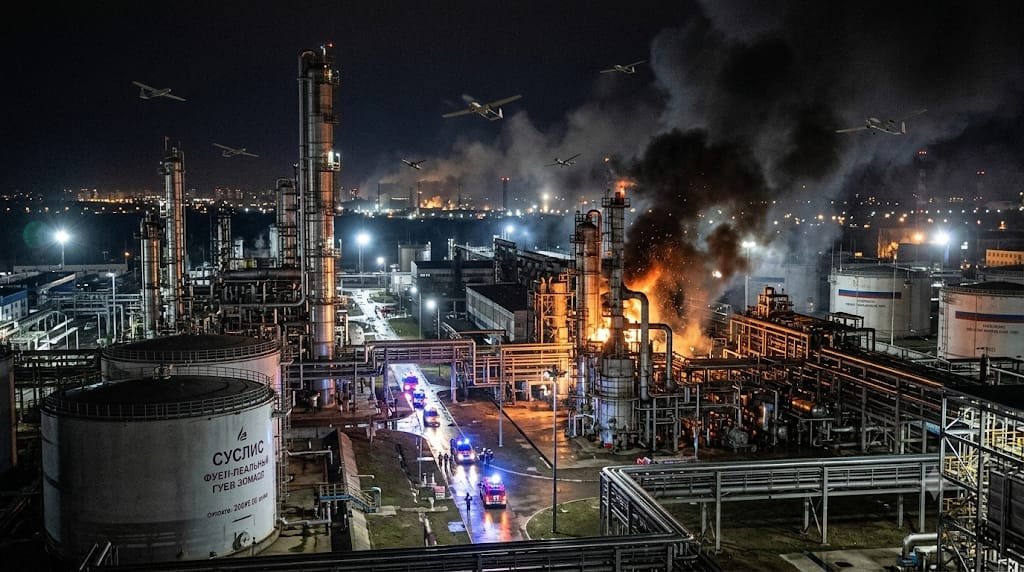
The war in Ukraine has been fought on the battlefield for more than four years, but some of the most important pressure on Russia is now coming from somewhere else: its energy infrastructure.
Ukrainian drone attacks on Russian oil refineries and fuel facilities are beginning to create problems for Moscow’s domestic fuel supply. The campaign has also attracted attention in Washington, with President Donald Trump calling on Ukraine to stop attacking Russian diesel-producing facilities.
The Kremlin welcomed Trump’s appeal on September 14, but Ukraine has given little reason to suggest that it is ready to abandon a strategy that allows it to strike deep inside Russian territory.
That raises a bigger question: could Russia’s growing fuel problems eventually change the course of the Ukraine war?
please read –Russian Drone Hits Train Near Poland
Ukraine Is Taking the War Deep Inside Russia
Russia Fuel Crisis
For much of the conflict, the biggest battles have taken place along the front line in Ukraine. But Ukrainian drones have increasingly changed the picture.
Instead of targeting only Russian military positions, Ukraine has been striking refineries, fuel depots and other energy infrastructure.
The objective is clear. Russia needs fuel not only for its civilian economy but also for its military. Trucks, armored vehicles, aircraft and supply networks all depend on a steady flow of energy.
The Ryazan refinery, an important facility serving the Moscow region, stopped operations after a drone attack on September 6, according to Reuters. It is one of several Russian energy facilities that have faced disruption from Ukrainian strikes.
For Ukraine, these attacks offer a way to put pressure on Russia far beyond the traditional battlefield.
Russia Has Plenty of Oil—So Why Is Fuel Becoming a Problem?
Russia Fuel Crisis
Russia is not running out of crude oil.
That distinction is important.
The problem is refining. Crude oil has to be processed before it becomes gasoline, diesel and other fuels that can be used by consumers, businesses and the military.
When refineries are damaged or forced to stop operating, Russia can lose part of its ability to turn crude into usable fuel.
Russia Fuel Crisis
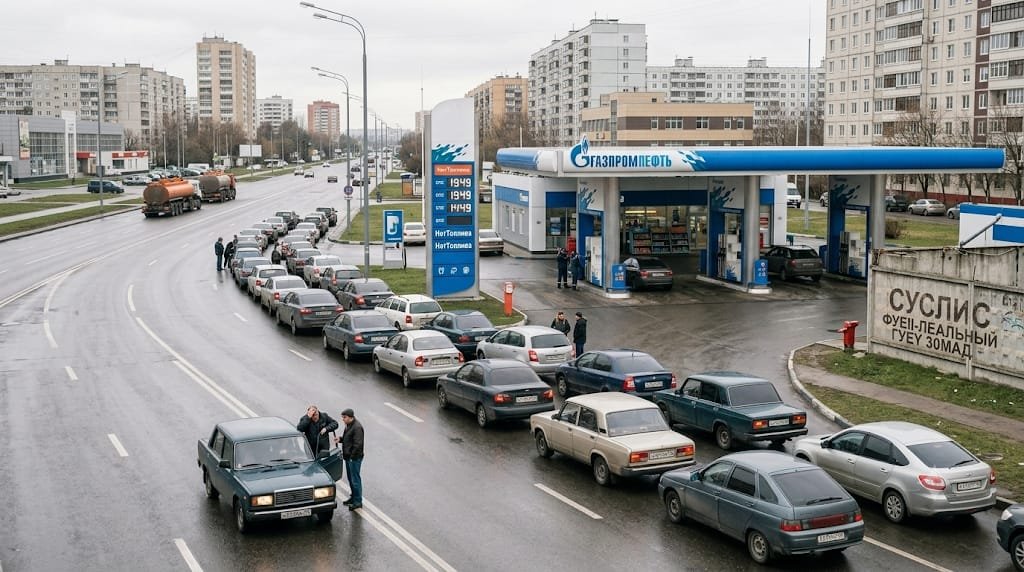
Moscow can respond by moving supplies between regions, increasing imports of refined fuel or introducing measures to protect domestic supplies. But each additional disruption makes the system more expensive and complicated to manage.
Recent reporting has indicated that Russia has increased fuel imports as refinery disruptions have affected domestic supplies.
Could This Actually Weaken Russia’s War Machine?
Russia Fuel Crisis
This is where the situation becomes more significant.
A fuel shortage will not suddenly stop the Russian military. Moscow still has enormous energy resources, a large industrial base and the ability to redirect supplies.
But modern warfare consumes huge amounts of fuel.
Russia Fuel Crisis
Every military operation requires transportation. Troops need supplies, vehicles need fuel and equipment has to be moved across long distances.
If refinery disruptions continue for an extended period, Russia could face higher costs and greater logistical pressure.
Ukraine does not necessarily need to destroy Russia’s entire oil industry. Even reducing refining capacity for long enough could force Moscow to spend more money simply keeping its domestic market supplied.
Why Trump Wants the Attacks to Stop
Russia Fuel Crisis
Trump’s intervention adds a new political dimension to the issue.
The United States has been pushing for an end to the Russia-Ukraine war, while Kyiv has continued to argue that pressure on Moscow is necessary.
Trump has called on Ukraine to stop attacks on Russian diesel facilities, and the Kremlin has welcomed that position.
For Russia, stopping the attacks would provide breathing room.
For Ukraine, however, the attacks are one of the few ways it can directly damage Russia’s economic and military infrastructure deep inside the country.
That difference in strategy could become increasingly important if peace negotiations continue.
Is This a Turning Point in the War?
Russia Fuel Crisis
It may be too early to call the fuel crisis a turning point.
Russia has survived major economic pressure before, and there is no indication that refinery attacks alone would force Moscow to end the war.
But the situation could become more important if the disruptions continue.
A prolonged fuel problem could mean higher transportation costs, more government intervention, increased imports and additional pressure on Russia’s already expensive war effort.
And there is another factor: the longer the war continues, the more valuable every source of economic pressure becomes.
For Ukraine, attacking Russian energy infrastructure is therefore not just about today’s fuel prices. It is about making the cost of continuing the war harder for Moscow to ignore.
Could the Fuel Crisis Bring the War Closer to an End?
Russia Fuel Crisis
There is no simple answer.
Wars rarely end because of a single refinery attack or one economic problem. Political decisions, battlefield developments, negotiations and international pressure all matter.
Still, Russia’s fuel problems could become part of a much larger equation.
If Ukraine can continue damaging Russian refining capacity while maintaining pressure on the battlefield, Moscow may face a more difficult economic and logistical environment.
That does not mean Russia is about to collapse, and it does not mean peace is imminent.
But it does suggest that the next phase of the Ukraine war may be fought not only with soldiers and missiles, but also through fuel, refineries and economic pressure.
The real question is no longer simply who controls more territory. It is whether either side can create enough pressure to make the other reconsider how long this war can continue.
Russia Fuel Crisis