
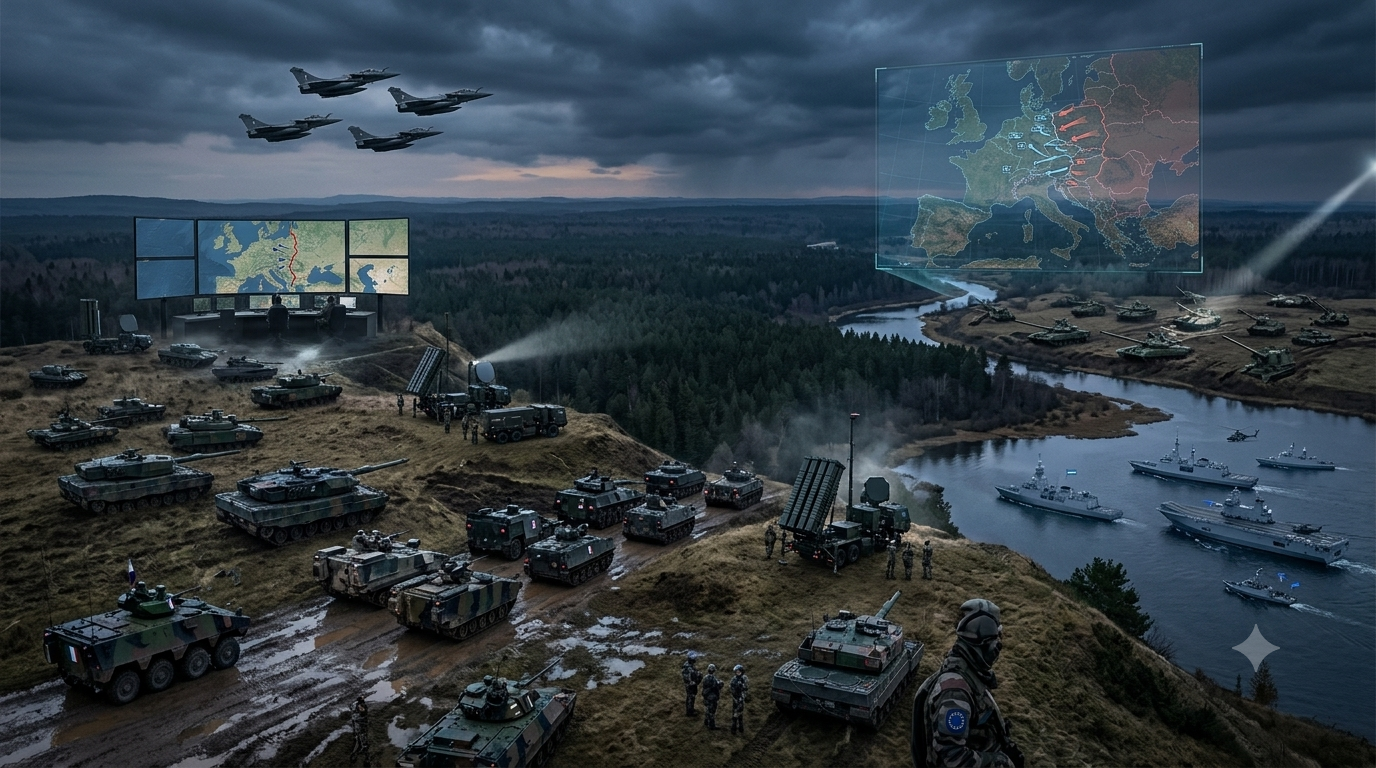
France lead Europe defense without US
Can France Lead Europe’s Defense Without the US? The Reality of European Strategic Autonomy
For years, France has argued that Europe should be capable of defending itself without relying entirely on the United States. That idea is now becoming more than a political debate.
As questions grow over the future of the U.S. military presence in Europe, European governments are increasing defense spending and discussing how much responsibility they can take for their own security. At the center of this debate is France, Europe’s only nuclear-armed European Union member and one of the continent’s most capable military powers.
But can France actually lead a European defense system without the United States?
The answer is complicated.
France Has Capabilities Few European Countries Can Match
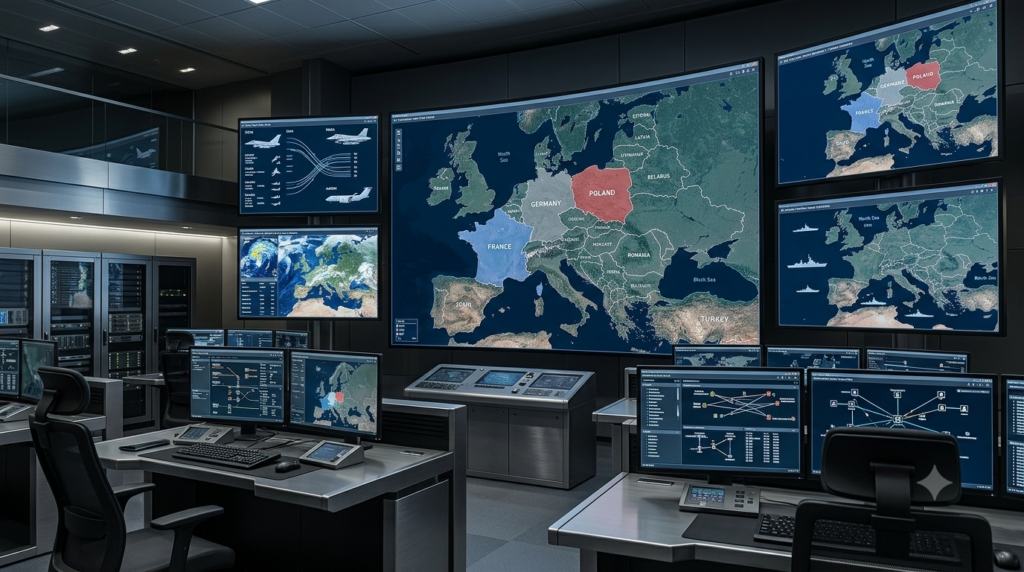
France lead Europe defense without US
France already has several capabilities that make it an important part of Europe’s defense structure.
It maintains a nuclear deterrent, a large military, an advanced aerospace and defense industry, aircraft carriers, nuclear-powered submarines and overseas military capabilities. French Rafale fighters are also used in long-range deployments, demonstrating that Paris can project military power beyond Europe.
France has also pushed the concept of “strategic autonomy” for years. The basic idea is that Europe should have the ability to make major security decisions and defend its interests even when American support is limited.
That argument has gained greater attention as Washington reviews its military posture in Europe. The United States still has roughly 80,000 troops stationed in Europe, but European governments are increasingly preparing for a greater share of the defense burden.
Nuclear Weapons Give France a Unique Role
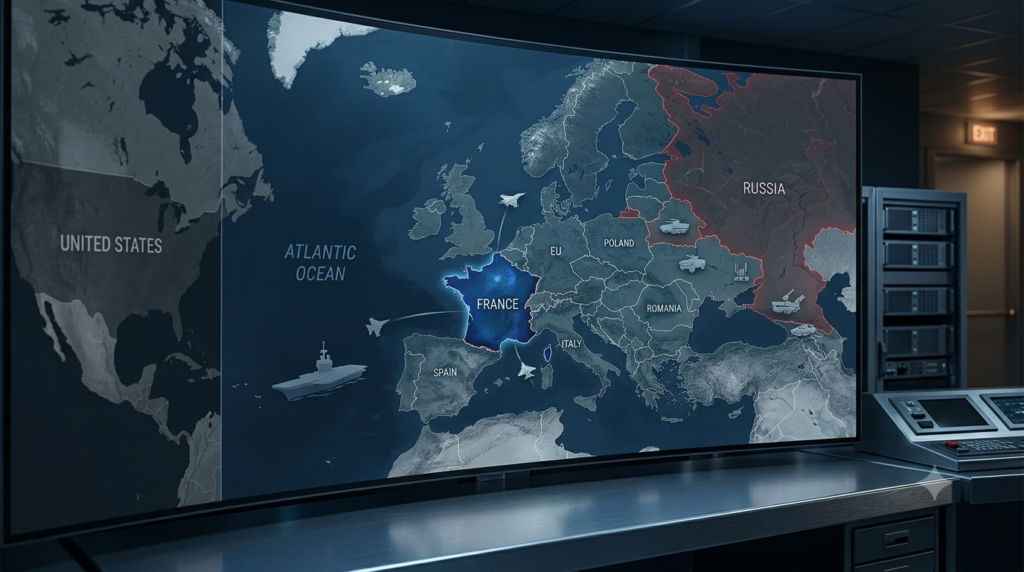
France’s biggest strategic advantage is its nuclear arsenal.
Unlike most European countries, France possesses an independent nuclear deterrent controlled by the French state. Paris has increasingly discussed whether its nuclear capabilities could contribute to wider European security discussions.
In 2026, France’s nuclear deterrence initiative has attracted participation from several European countries. Finland recently joined the French Forward Nuclear Deterrence Initiative, although Finnish officials stressed that the arrangement does not mean Finland intends to host nuclear weapons during peacetime.
This could give France a distinctive role in European strategic discussions.
However, French nuclear weapons are not equivalent to NATO’s nuclear-sharing arrangements. The decision to use France’s nuclear arsenal remains under French authority. That distinction is important when considering what a future European defense structure could actually look like.
Europe Still Has a Major Military Gap
The biggest problem is that having capable individual countries is not the same as having a unified European military.
European countries have different weapons systems, command structures, procurement policies and strategic priorities. The European Court of Auditors recently warned that the EU’s ability to defend itself against a major invasion by 2030 remains uncertain, despite a sharp increase in defense spending since Russia’s invasion of Ukraine.
The problem is therefore not simply money.
Europe needs ammunition production, air-defense systems, long-range weapons, intelligence capabilities, military transport, logistics, satellite systems and integrated command structures.
Many of these areas have historically benefited from American capabilities.
That means replacing the United States would require years of investment and coordination rather than simply increasing national defense budgets.
France Cannot Do It Alone
France may be one of Europe’s strongest military powers, but a European defense system led by France would still require major contributions from other countries.
Germany has enormous industrial and economic capacity. Poland has rapidly increased its military spending and is building one of Europe’s largest conventional forces. The United Kingdom, although outside the EU, remains a major European military power and possesses its own nuclear deterrent.
Northern and Eastern European countries also bring important military capabilities and frontline experience to the broader European security picture.
Recent developments show that Germany, for example, is simultaneously increasing defense cooperation with the United States while expanding its own military capabilities. Berlin recently signed a defense-industry cooperation agreement with Washington that includes plans involving Tomahawk cruise missiles.
This illustrates the central reality of European strategic autonomy: Europe is preparing to do more for itself, but that does not automatically mean abandoning cooperation with America.
The Real Question Is Not France or America
The more important question may be whether Europe can build a defense system capable of operating with much less American support.
France can provide nuclear deterrence, advanced aircraft, naval capabilities and military leadership. Germany can provide industrial and economic weight. Poland and other eastern European states can provide substantial conventional forces. The UK can contribute nuclear, naval and intelligence capabilities.
But these capabilities must be integrated.
European defense experts have repeatedly pointed to fragmentation as one of the major obstacles to strategic autonomy. Even with dramatically higher defense spending, Europe still needs greater cooperation in procurement, industry and military planning.
Can France Lead Europe?
France is likely to remain one of the central countries in any discussion about a more independent European defense structure.
But “leading Europe” and “replacing the United States” are two very different things.
France has strategic weapons and global military capabilities that most European countries do not possess. Yet the scale of Europe’s security requirements is too large for one country to handle alone.
The more realistic future may therefore be a stronger European defense system in which France plays a major strategic role, Germany provides greater industrial and financial power, and other European countries expand their conventional military capabilities.
Whether that system can eventually operate with limited American involvement remains an open question.
For now, Europe’s strategic autonomy is no longer just a French idea. It is becoming a practical security debate across the continent—but turning that ambition into a fully independent military capability will require years of investment, coordination and political agreement.
1 thought on “Can France Lead Europe Defense Without the US? The Reality of European Strategic Autonomy”