
Canada EU Associate Member
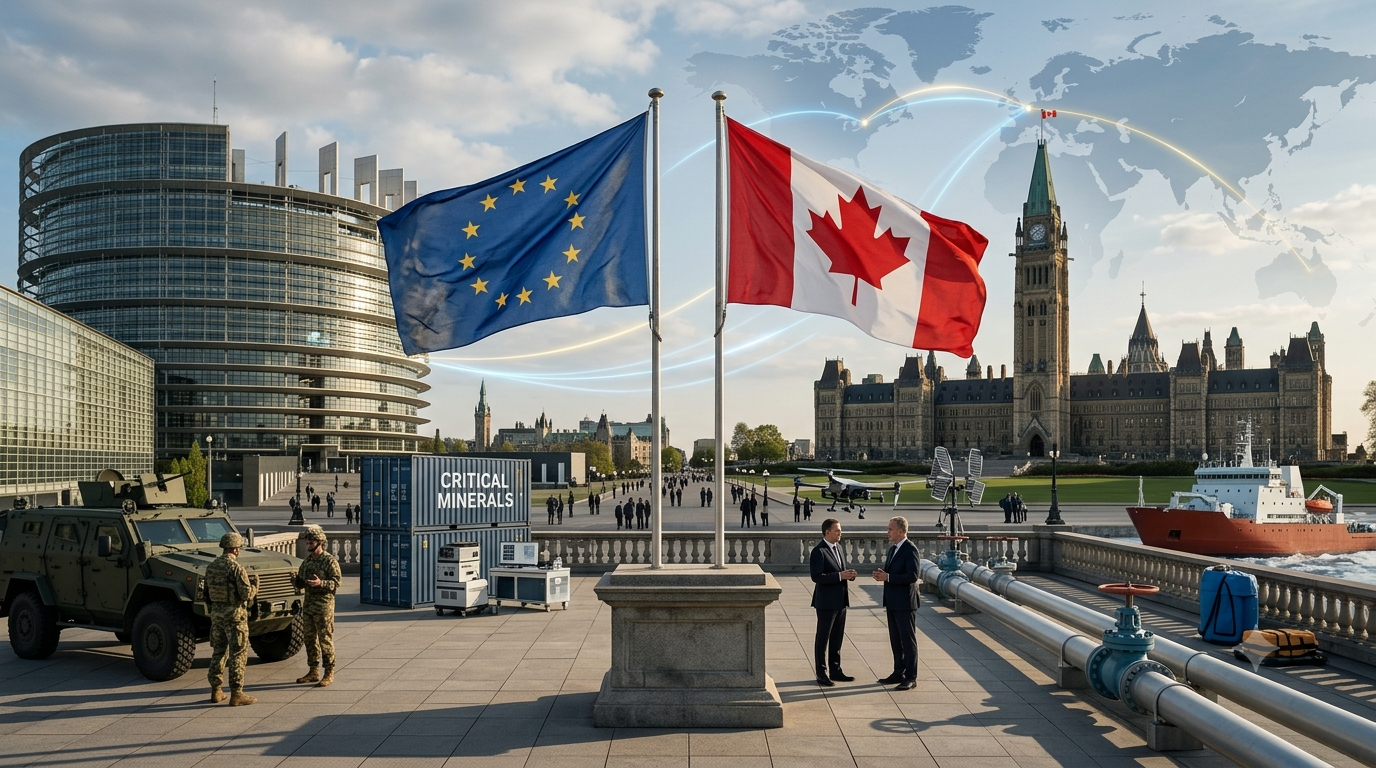
STRASBOURG — September 16, 2026: The European Union has proposed opening a new path for Canada to become the bloc’s first “associate member,” marking a significant expansion of relations between Brussels and Ottawa.
European Commission President Ursula von der Leyen made the proposal during her annual State of the Union address at the European Parliament in Strasbourg, with Canadian Prime Minister Mark Carney in attendance.
The proposal does not mean Canada is joining the European Union as a full member. Instead, Brussels is considering a new form of partnership that could bring Canada closer to the EU on trade, defense, technology, energy, critical minerals and economic security.
Why Canada Is Suddenly at the Center of EU Strategy
A Different Kind of EU Partnership
The proposal comes as both sides look to deepen cooperation beyond their existing economic relationship.
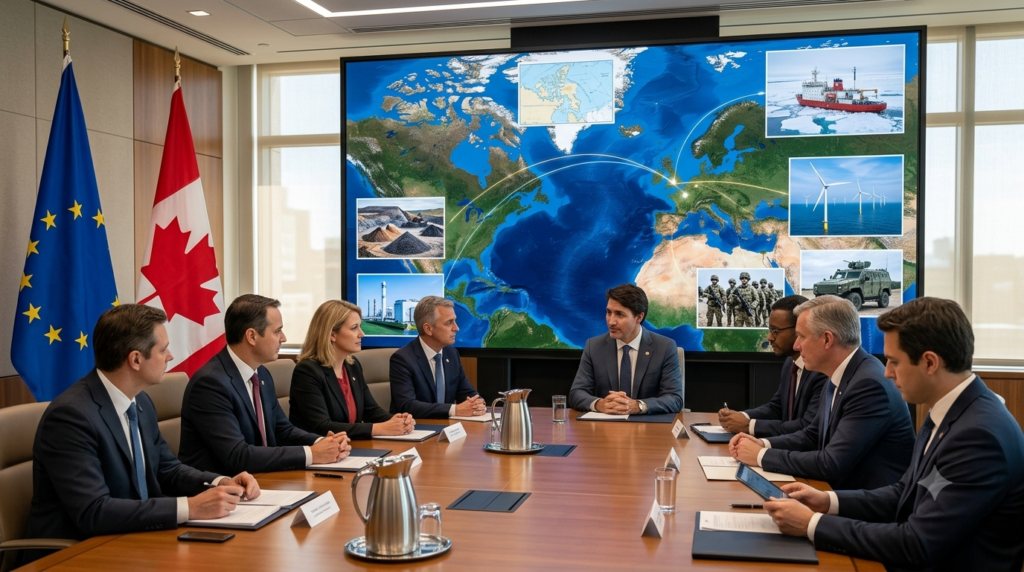
The EU and Canada already have the Comprehensive Economic and Trade Agreement, or CETA. But von der Leyen presented the idea of an “Alliance for the Future” that would expand cooperation into strategic industries and security-related areas.
The proposed partnership could cover advanced manufacturing, artificial intelligence, quantum technology, defense industries, critical minerals, energy and Arctic development.
That makes the proposal broader than a traditional trade agreement. It would create a framework for closer cooperation between Canada and the EU at a time when supply-chain security and access to strategic resources have become major economic concerns.
Can France Lead Europe Defense Without the US? The Reality of European Strategic Autonomy
Canada Is Seeking a Deeper Relationship With Europe
Carney Has Already Pushed for a “Unique Alliance”
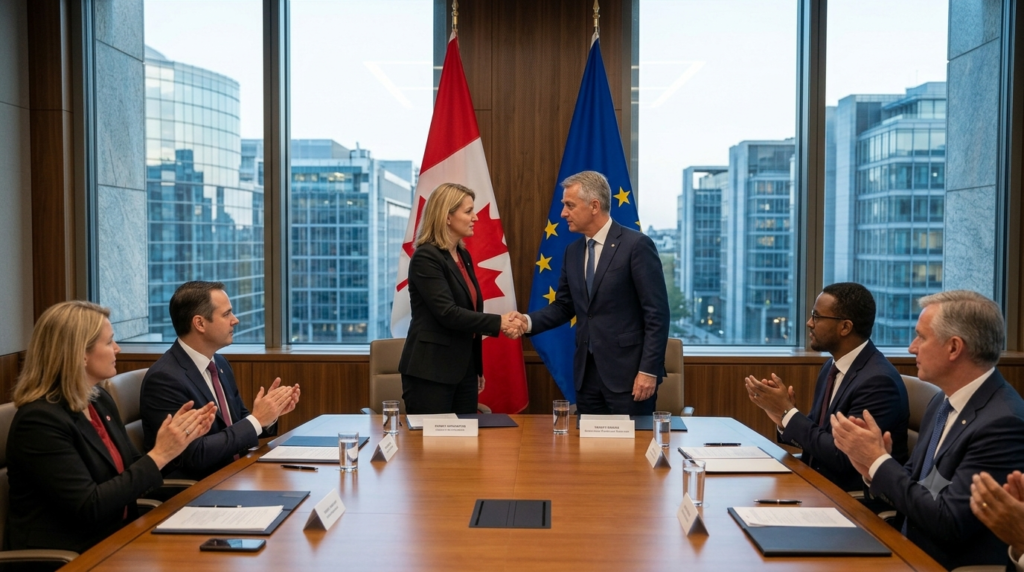
The EU proposal follows a push from Canadian Prime Minister Mark Carney for a stronger relationship with Europe.
Carney has said Canada is looking for a “unique alliance” with the European Union rather than seeking full EU membership. His government has been looking at ways to expand Canadian economic and security partnerships as Ottawa reassesses its dependence on the United States.
The timing is significant because Canada’s relationship with Washington has become more difficult under President Donald Trump, including disputes over tariffs and trade.
Canada sends roughly 70% of its exports to the United States, according to AP, making diversification of trade and investment an important issue for Ottawa.
What Would Associate Membership Mean?
Canada Would Not Become an EU Member State
The phrase “associate member” is important because it does not mean Canada would become the EU’s 28th full member.
The proposed status is a new and largely undefined model. Details such as market access, regulatory cooperation, institutional participation and Canada’s obligations would have to be negotiated.
That distinction also matters because full EU membership involves much deeper legal and political integration. The current proposal is instead aimed at creating closer cooperation while Canada remains outside the European Union.
Defense, Technology and Critical Minerals Take Center Stage
Cooperation Could Go Beyond Trade
Defense and economic security are becoming increasingly important parts of the Canada-EU relationship.
The EU has been seeking stronger partnerships with countries that can contribute to European security and resilient supply chains. Canada, meanwhile, has significant natural resources and technological capabilities that could support European efforts to reduce vulnerabilities in strategic industries.
Critical minerals, batteries, artificial intelligence, quantum technology and advanced manufacturing are among the areas being discussed as part of a deeper partnership.
The Arctic Adds Another Strategic Dimension
The Arctic is another area where Canadian and European interests increasingly overlap.
Canada’s position in the Arctic gives it a direct role in questions involving northern security, infrastructure, resources and emerging shipping routes. The EU has also become more focused on the region as geopolitical competition and security concerns increase.
Von der Leyen included Arctic cooperation among the areas where Europe and Canada could develop closer joint projects.
The Proposal Still Faces Major Questions
The announcement is politically significant, but the associate-member arrangement is not yet an established agreement.
The proposal would require further discussions between Canada and the EU, while EU member states would also need to agree on the details. Questions remain over how much economic access Canada would receive, how closely it would align with EU rules and what institutional role an associate member would have.
For now, the announcement signals that Brussels and Ottawa are exploring a relationship that goes well beyond their existing trade framework.
The proposal also gives Canada and the EU a new platform for cooperation at a time when both sides are reassessing trade, security and supply chains in a rapidly changing international environment.