
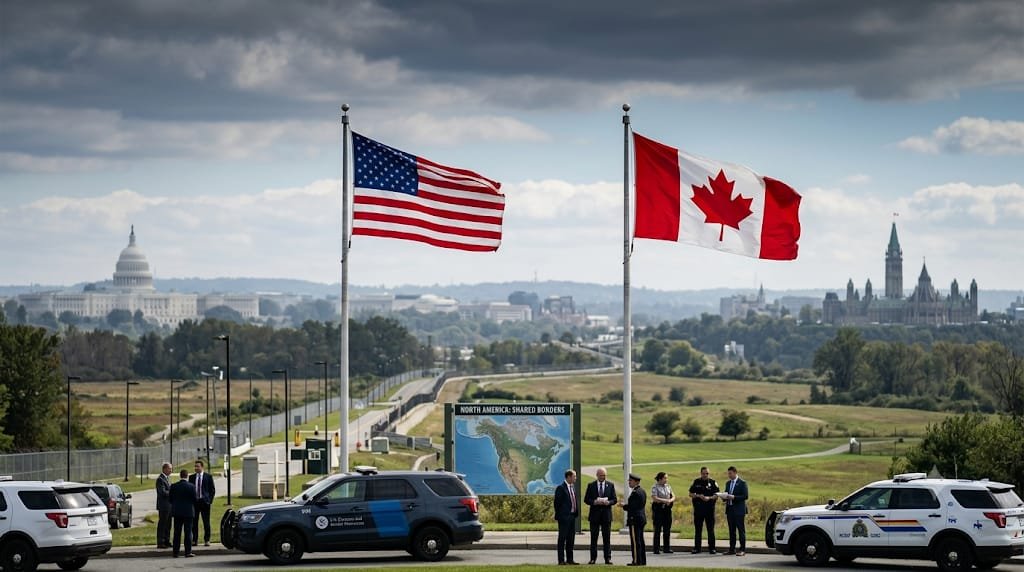
The idea of Canada becoming the United States’ 51st state has moved far beyond an internet joke.
President Donald Trump has repeatedly raised the possibility of Canada joining the United States, and the issue has returned to the spotlight as relations between Washington and Ottawa have become increasingly tense. In recent weeks, the debate has been accompanied by a worsening trade dispute, fresh political rhetoric and growing concern in Canada about American pressure.
Canada 51st State?
But could it actually happen?
The short answer is: not easily—and certainly not without Canada itself agreeing to a fundamental change in its national identity.
Is America Actually Preparing to Take Canada?
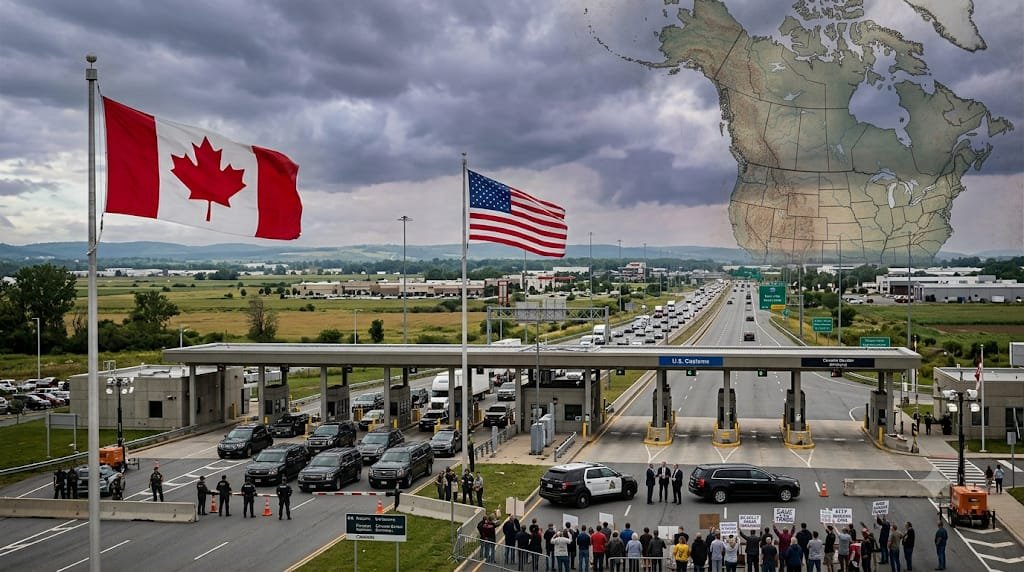
There is no evidence of a formal U.S. government plan to turn Canada into a state.
That distinction matters.
Trump has used the 51st-state idea repeatedly, but turning an independent country of roughly 40 million people into part of the United States would require an enormous political and legal transformation. It would not be something a president could simply announce and implement.
Under the U.S. Constitution, Congress has the authority to admit new states into the Union. In other words, even if a future administration wanted to pursue Canadian statehood, the process would have to go through the American political system.
And there would be another, much larger problem: Canada.
Canada 51st State?
Canada Would Have to Agree
Canada is not an American territory waiting for statehood. It is a sovereign country with its own government, Parliament, constitution, military, currency, healthcare system and international relationships.
For Canada to become an American state, Canadians would almost certainly have to accept a historic constitutional and political transformation.
Canada 51st State?
That is where the proposal runs into perhaps its biggest obstacle: public opinion.
Polling has repeatedly shown strong Canadian opposition to joining the United States. One Angus Reid survey found that roughly nine out of ten Canadians would vote against becoming part of the United States.
Another Leger poll found that 82% of Canadians opposed the idea, while only 13% supported it.
So even before Washington could worry about Congress, it would have to confront the Canadian public.
What Would America Gain?
Canada 51st State?
The attraction for Washington is not difficult to understand.
Canada has enormous reserves of oil, natural gas, minerals, timber and other natural resources. It also has a large educated population, a sophisticated industrial base and a strategic position stretching from the Atlantic to the Pacific and into the Arctic.
For the United States, bringing Canada into the Union could theoretically create an enormous North American economic and security bloc.
But the costs would be just as enormous.
The United States would have to integrate Canadian institutions, laws, political systems and public services. Questions about taxation, healthcare, gun laws, immigration, provincial governments and representation in Congress would become immediate political battles.
Canada would not simply become another state overnight.
How Could Canada Prevent It?
Canada 51st State?
For Canada, the most practical answer is not military confrontation. It is to strengthen its economic and political independence.
That is already becoming a major theme in Ottawa.
As trade tensions with Washington have intensified, Prime Minister Mark Carney’s government has been pushing Canada to reduce its dependence on the U.S. and develop stronger economic relationships elsewhere. Canada has also been looking toward Europe and other global markets.
The logic is straightforward: the more diversified Canada’s economy becomes, the less leverage Washington has over Ottawa.
Canada can also strengthen its own defense capabilities, secure critical supply chains and deepen relationships with European and other democratic partners.
So, Will Canada Become the 51st State?
Canada 51st State?
For now, the idea remains far more political rhetoric than realistic statehood plan.
The legal pathway exists for the United States to admit a new state, but that does not mean Washington can simply absorb a neighboring sovereign country. The political, constitutional and diplomatic barriers would be enormous.
More importantly, the overwhelming majority of Canadians do not appear interested in giving up Canadian sovereignty.
That leaves the 51st-state debate in an unusual position.
It is serious enough to affect diplomacy, politics and public opinion—but still extremely unlikely to become reality.
The bigger question may therefore be different: how much will the relationship between the United States and Canada change before both countries decide that cooperation is more valuable than confrontation?
For now, Canada appears determined to remain Canada. And Washington has yet to demonstrate a realistic path to making it anything else.
Canada 51st State?
please also read-NATO vs BRICS: Military Strength, Weapons & Who Would Win?