
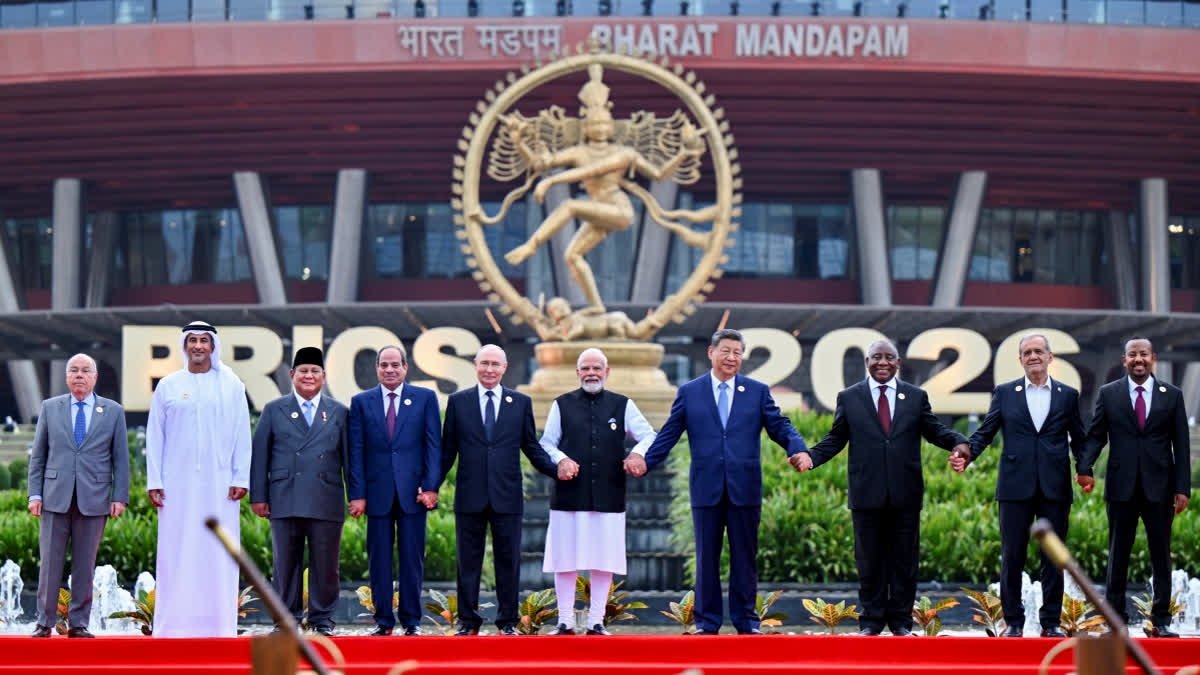
The 18th BRICS Summit in New Delhi has produced a major diplomatic statement at a time when global conflicts, trade tensions and economic uncertainty are putting pressure on the international system. BRICS leaders unanimously adopted the New Delhi Declaration, calling for greater international cooperation, peaceful conflict resolution and a stronger voice for developing countries.
The declaration comes as tensions in the Middle East remain high, with the United States and Iran involved in renewed hostilities. BRICS leaders expressed deep concern over the escalation in West Asia and called for “maximum restraint” to prevent the situation from becoming even more dangerous. The group emphasized dialogue, consultation and diplomacy as the preferred methods for resolving international disputes.
BRICS Sends a Message on Global Conflicts
One of the most important aspects of the New Delhi Declaration is its focus on conflict prevention. BRICS countries said that growing geopolitical polarization and military spending are creating serious risks for global peace and development.
The declaration also highlights concerns about nuclear risks and calls for stronger arms-control and non-proliferation efforts. BRICS leaders want international disputes to be addressed through diplomatic channels rather than military escalation.
The bloc also condemned terrorism and addressed the 2025 Pahalgam terrorist attack in Jammu and Kashmir, reinforcing its position that terrorism should not be tolerated in any form.
Why the Declaration Matters for the United States
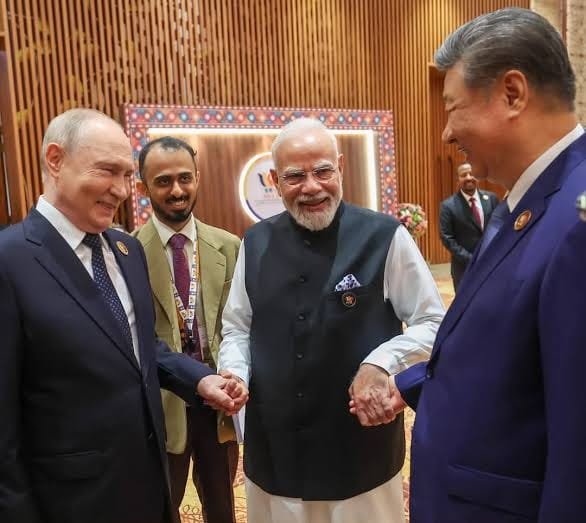
The New Delhi Declaration also has an economic dimension that could attract attention in Washington.
BRICS has increasingly pushed for reforms in international financial institutions and greater representation for emerging and developing economies. The declaration supports changes to global institutions so that their decision-making better reflects the current global economy.
18th BRICS Summit
The group has also criticized unilateral tariffs and trade restrictions that it believes can distort international trade. This is significant because several BRICS members face US sanctions or trade restrictions, particularly Russia and Iran.
However, the declaration should not be interpreted as BRICS immediately replacing the US-led economic system. The member countries have different economic interests and geopolitical priorities, and India in particular has supported a more practical approach rather than turning BRICS into an explicitly anti-US alliance.
Could BRICS Challenge the US Dollar?
18th BRICS Summit
The growing economic influence of BRICS could create a long-term challenge for the dominance of the US dollar if members gradually expand trade in local currencies and develop alternative payment mechanisms.
But this is likely to be a gradual process rather than an immediate shift. BRICS members remain heavily connected to global markets and the dollar-based financial system. Differences between countries such as India and China also make complete financial integration difficult.
For the US economy, the bigger issue may therefore be the gradual emergence of alternative economic networks rather than an immediate loss of dollar dominance.
A Shift Toward a Multipolar World
18th BRICS Summit
The New Delhi Declaration reflects a broader change in global politics. BRICS is seeking greater influence for the Global South and stronger representation in international institutions.
For India, hosting the summit also provides an opportunity to position itself as a bridge between developing economies and the wider international system. The declaration’s emphasis on diplomacy, development, trade and institutional reform fits India’s broader effort to maintain strategic relationships with both Western and non-Western powers.
Ultimately, the 18th BRICS Summit does not signal the end of the existing global economic order. Instead, it shows that emerging powers are demanding a larger role in shaping it. As geopolitical conflicts and trade tensions continue, the influence of BRICS—and its relationship with the United States—could become one of the defining economic and diplomatic stories of the coming years.
2 thoughts on “18th BRICS Summit Adopts New Delhi Declaration: What It Means for Global Conflict and the US Economy”