
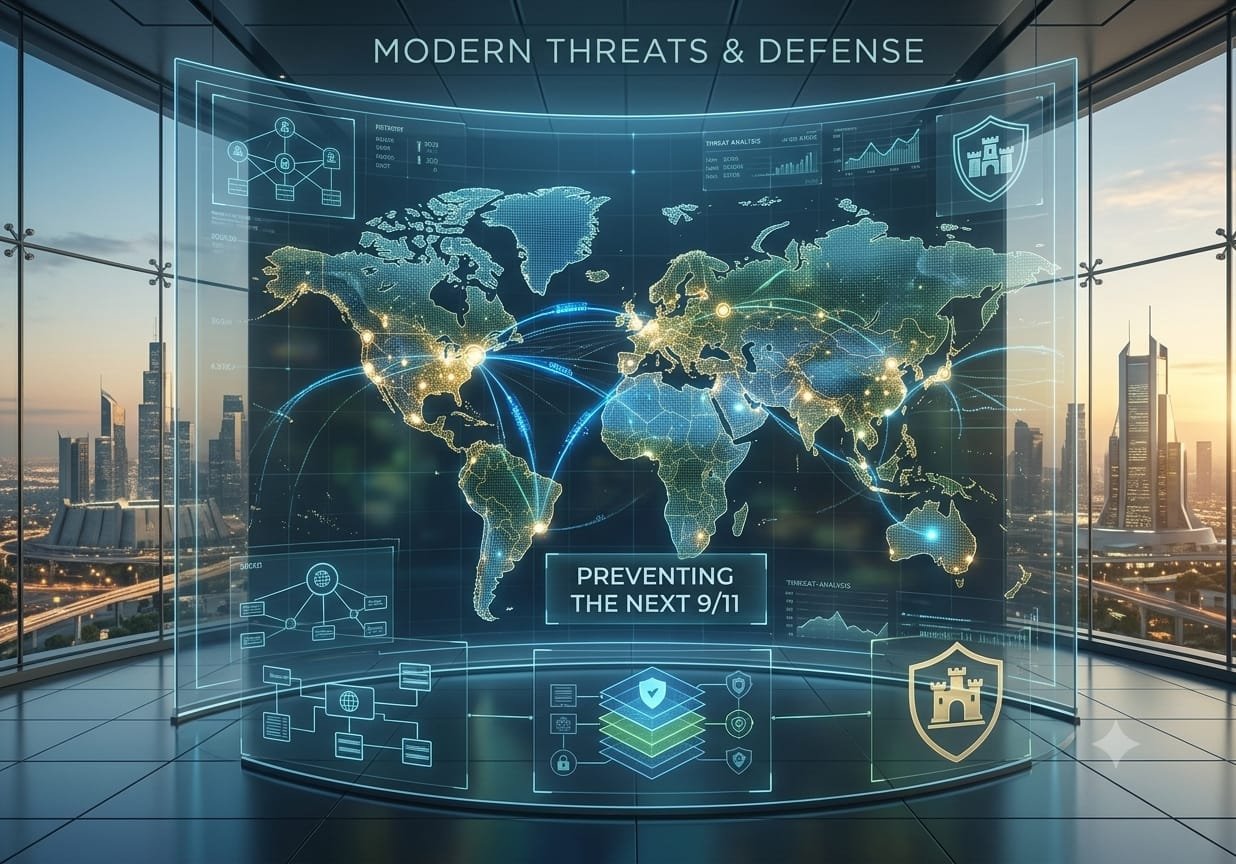
Analyzing how to prevent another 9/11 attack has reshaped modern national security and global intelligence. When the 9/11 Commission published its landmark report in 2004, it identified the root cause of the catastrophic intelligence failure not as a lack of resources, but as a “failure of imagination.” The world had prepared for hijackings, hostage negotiations, and conventional state conflicts—not commercial airliners weaponized into guided missiles.
When the 9/11 attack Commission published its landmark report in 2004, it identified the root cause of the catastrophic intelligence failure not as a lack of resources, but as a “failure of imagination.” The world had prepared for hijackings, hostage negotiations, and conventional state conflicts—not commercial airliners weaponized into guided missiles.
Over the past quarter-century, that vulnerability sparked the most extensive reorganization of American security in modern history. Yet, as the geopolitical landscape evolves, the greatest danger facing the nation is preparing exclusively to fight the last war. Preventing the next catastrophic attack requires looking beyond cockpit doors and airport magnetometers toward an entirely new spectrum of asymmetrical warfare.
Dismantling Silos: The Intelligence Frontier for next 9/11attack
The original 9/11 attacks succeeded in part because critical fragments of intelligence were trapped inside bureaucratic silos. The CIA had clues, the FBI had domestic leads, and the FAA had aviation protocols, but no single entity was effectively connecting the dots.
Preventing a future catastrophe demands continuous modernization of intelligence sharing:
Predictive AI and Data Synthesis:
Today’s intelligence challenge is not a lack of data, but a paralyzing flood of it. Modern defense relies on secure, explainable artificial intelligence capable of parsing millions of global data points—from illicit dark-web financing to encrypted chatter—to identify emerging plots in real time without compromising civil liberties.
Agile Global Coalitions:
Terrorist networks and rogue non-state actors no longer operate out of centralized camps. Real-time counterterrorism requires borderless intelligence cooperation with international partners to disrupt funding pipelines before operational plans ever materialize.
Securing the Digital Border: The Threat of Hybrid Warfare
The next catastrophic 9/11 attack may not involve kinetic weapons or physical borders; it is far more likely to arrive via fiber-optic cables. Modern nation-states and proxy extremist factions increasingly favor asymmetrical, decentralized tools designed to cripple a country from the inside out:
Critical Infrastructure Hardening: The power grid, municipal water systems, financial clearinghouses, and civilian aviation networks are heavily digitized. A coordinated cyber offensive on regional power grids during extreme weather could inflict civilian casualties and economic devastation comparable to a kinetic strike.
Weaponized Disinformation: Adversaries actively exploit digital networks to seed institutional distrust, inflame domestic polarization, and incite violent extremism. National resilience begins with digital literacy and robust public-private coordination between federal agencies and tech platforms to neutralize coordinated influence operations.
Autonomous and Biological Tech Proliferation: Commercial off-the-shelf drones, decentralized manufacturing, and synthesized biological materials present asymmetric risks that do not require state budgets to execute. Tightening supply-chain oversight on dual-use biotechnology and automated hardware is no longer optional.
The Foundation of Resilience: Preserving Civic Unity
Trump Dividend $5,000 FOR EVERY AMERICAN
Perhaps the most overlooked vulnerability in national defense is domestic division. Catastrophic adversaries thrive when target nations are politically paralyzed and socially fragmented.
In the immediate wake of September 11( 9/11 attack), the country demonstrated that its ultimate shield was not military hardware, but collective resolve and mutual trust. Preventing the next major crisis requires cultivating the same civic health: ensuring local communities, first responders, and ordinary citizens are trained, vigilant, and bound by shared responsibility.
Securing the future does not mean transforming into a fortress of fear. It means cultivating relentless imagination, hardening modern digital lifelines, and recognizing that true defense lies in maintaining both our vigilance and the democratic freedoms we seek to protect.
Key Strategic Priorities for Modern Defense
To maintain a proactive defensive posture against emerging threats, national defense architectures must focus on three core pillars:
- Rapid Response Protocols for Prevent the Next 9/11 attack: Updating real-time coordination frameworks between civil aviation, local emergency responders, and federal intelligence units.
- Supply Chain Hardening: Ensuring critical technology components, automated drones, and secure communications hardware are protected from foreign tampering.
- Public Awareness & Preparedness: Fostering transparent civic vigilance so local communities can identify and report suspicious asymmetric risks before they materialize.
1 thought on “How to Prevent the Next 9/11attack : Modern Threats and the Future of National Security”