NATO Baltic Readiness for a Direct Russian Probe
The Baltic region is once again at the center of Europe’s security concerns as NATO increases vigilance along its eastern flank and officials watch closely for any sign that Russia could test the alliance’s defenses.
The latest warning came on Sunday, when Lithuania temporarily closed Vilnius Airport after radar detected what was initially believed to be a drone. NATO quickly scrambled a fighter jet from its Baltic air-policing mission. The alert was later determined to have been caused by a flock of birds, and the airport reopened within 38 minutes.
NATO Baltic Readiness for a Direct Russian Probe
Although the incident turned out to be a false alarm, it highlights how sensitive the Baltic region has become since Russia’s invasion of Ukraine.
Why the Baltics Matter
NATO Baltic Readiness for a Direct Russian Probe
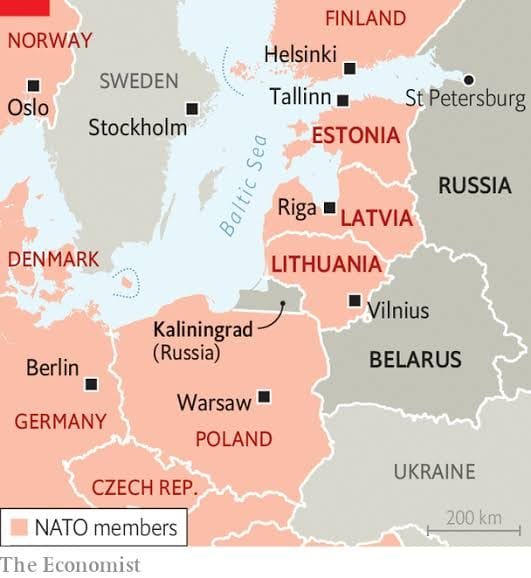
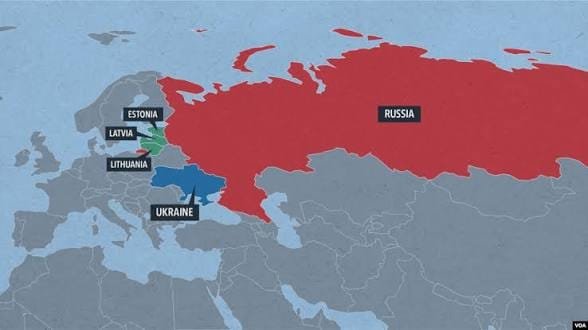
Estonia, Latvia and Lithuania sit directly on NATO’s eastern frontier, bordering Russia and, in Lithuania’s case, Russia’s heavily militarized Kaliningrad region.
For NATO, a serious Russian military probe against any Baltic state would be far more dangerous than another incident in Ukraine. All three Baltic countries are NATO members, meaning a deliberate attack could trigger the alliance’s collective-defense mechanisms.
That makes the region a potential “tripwire”—a place where even a limited military confrontation could quickly become a much larger NATO-Russia crisis.
NATO Is Increasing Its Readiness
NATO Baltic Readiness for a Direct Russian Probe
NATO has spent years strengthening its eastern flank with additional troops, air defenses, fighter aircraft and maritime surveillance. The alliance has also expanded its ability to respond rapidly to airspace violations and other potential threats.
The Baltic Sea has become another major security focus. NATO has increased surveillance of critical infrastructure, including undersea cables and other assets that could be targeted through sabotage or hybrid operations.
NATO Baltic Readiness for a Direct Russian Probe
Recent Western intelligence concerns have also focused on Russian activity below the threshold of open war, including cyberattacks, sabotage and surveillance.
The Bigger Risk: A Test Below the War Threshold
NATO Baltic Readiness for a Direct Russian Probe
Security officials are increasingly concerned that Russia would not necessarily begin with a conventional invasion.
A future confrontation could start with drones, cyberattacks, sabotage, GPS disruption or other ambiguous incidents designed to test how quickly NATO responds.
That is why even a false drone alert in Lithuania can trigger an immediate military response.
European officials have warned that Russia’s growing use of hybrid tactics could create difficult decisions for NATO without immediately crossing the threshold of a conventional attack.
Could Russia Actually Test NATO?
NATO Baltic Readiness for a Direct Russian Probe
There is currently no confirmed evidence of an imminent Russian attack on the Baltic states. Baltic officials have repeatedly pushed back against claims that an invasion is about to happen.
But the strategic concern remains.
Russia is still fighting a major war in Ukraine, while NATO is trying to make clear that any deliberate attack on Estonia, Latvia or Lithuania would carry consequences far beyond the battlefield.
For now, the Baltic region remains heavily watched rather than on the verge of war. But as the Ukraine conflict continues, every unexplained drone, airspace incident or act of sabotage is being treated as a potential warning sign.
The message from NATO is increasingly clear: if Russia tests the Baltic “tripwire,” the response may involve the entire alliance.
Russia-Ukraine War Latest Update